Discover the Top 10 SMT Assembly Brand Machines for 2025
Take a closer look at advanced SMT machines and solutions shaping modern electronics manufacturing.This guide reviews the finest pick-and-place machines, both automatic and manual SMT placement systems, reliable SMT equipment manufacturers, inspection tools, and SMT solutions designed specifically for smart factories.Whether you’re setting up a small production line or expanding to full high-speed assembly, there are solutions tailored to your production needs.
Table of Contents
ToggleIntroduction to SMT Assembly Equipment
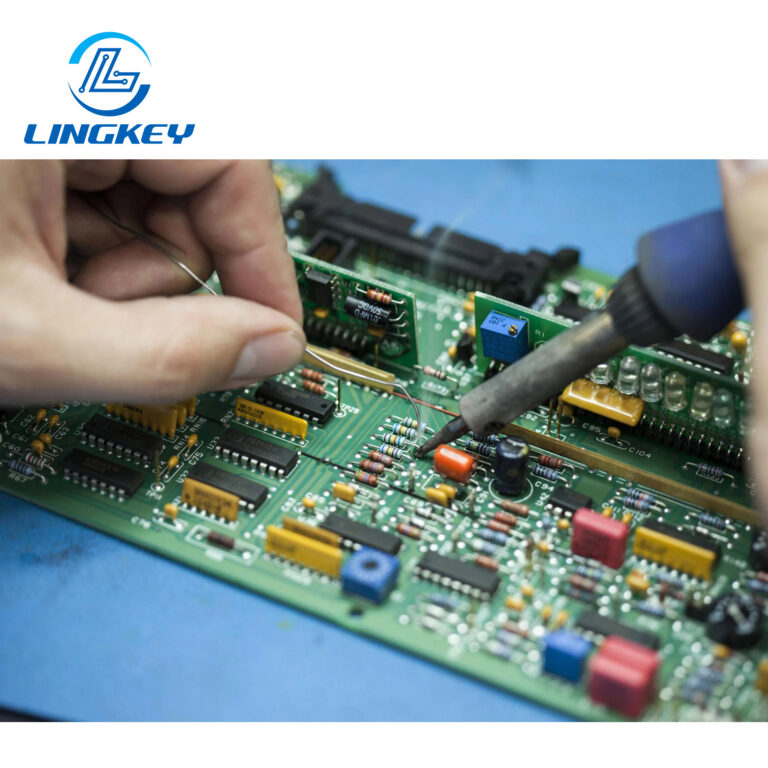
Surface Mount Technology (SMT) revolutionized the way modern electronic assembly is performed. Today’s SMT machines and SMT equipment are designed to meet the ever-growing demands for speed, accuracy, and miniaturization in the electronics industry. Whether you’re a large-scale manufacturer or entering the market with entry-level machines, the right combination of pick and place, reflow oven, and inspection machines is vital for a high-performing production line that can assemble a wide range of SMT products and types of components.
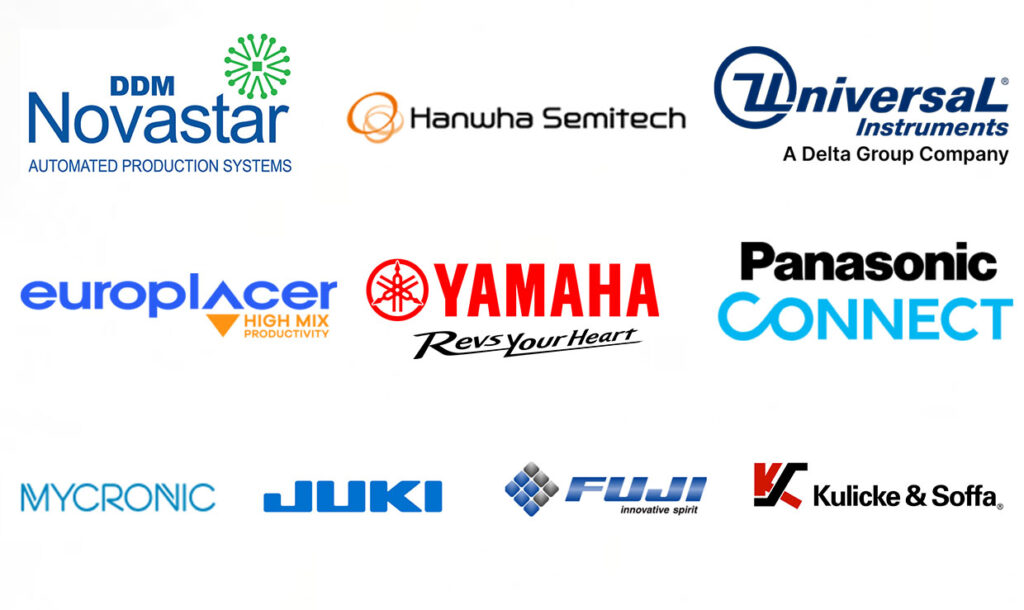
The development of the smart factory concepts, advanced SMT assembly machines and flexible production lines has revolutionized the electronic assembly now making it more available, high-efficient and high-scalable. With manufacturers such as Europlacer, Juki, Yamaha, Panasonic, Mycronic, and others at the forefront, there are SMT solutions to suit every requirement, including automated lines and manual machines for prototyping and small batch production.
What Is Surface Mount Technology? (SMT)

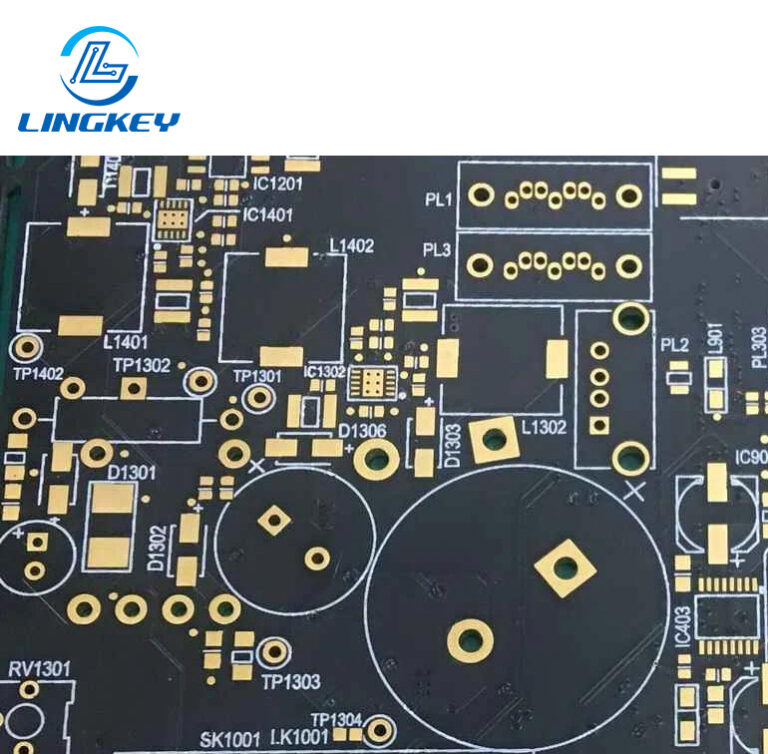
Surface Mount Technology (SMT) is a widely used method for mounting electronic components in the electronics manufacturing industry. This technology directly mounts electronic components (called surface mount devices (SMDs)) onto the surface of a printed circuit board (PCB). This electronic assembly process is faster, more flexible, and facilitates the manufacture of products with smaller vias, more complex wiring, and higher reliability.
Advantages:
- SMT equipment enables more efficient assembly, helping factories increase throughput.
- It can assemble smaller components; high-density assembly saves PCB space, allowing for the design of complex, high-density circuit boards.
- It supports flexible electronic product design and enables complete SMT assembly.
SMT pick-and-place machines offer significant advantages in modern electronic assembly, providing production line manufacturers with high-speed, high-precision equipment. This equipment can be cascaded with other equipment such as pick-and-place machines for precise mounting of micro-components and ensures perfect solder joints, such as in reflow ovens, forming a high-speed, complete SMT production line for manufacturing high-quality, high-reliability electronic products.
Types of SMT Machines and SMT Solutions
A wide range of SMT equipment is available for every step of the PCB assembly process. Understanding these SMT machine types helps you configure the most efficient line:
Pick and Place Machines
- Manual, Semi-Automatic, and Automatic Pick-and-Place Machines:The pick-and-place machine picks components from the feeders and precisely places them on the solder-pasted PCBs, offering high efficiency and precision.
- Universal SMT and Flexible Assembly:Modern versions work with many SMD sizes and come with smart feeders and cameras that help place each part right where it belongs.
Solder Paste Screen Printer
- The function is to apply solder paste to the PCB pads, ensuring reliable soldering of all types of components and guaranteeing the long-term stability and performance of the product.
SMT Curing Oven
- SMT curing sets adhesives in place, giving parts extra stability before reflow soldering. It’s especially useful in semiconductor and other precision assembly lines.
Reflow Soldering Machine
- This machine, commonly known as a reflow oven, melts solder paste with high temperatures and then cools to permanently bond components to the board — a fast and reliable process, perfect for high-volume production.
Inspection Systems and Machines
- At this point, each circuit board is inspected using AOI, X-ray, and SPI systems. They verify that the components are properly placed, that the solder joints are good, and that all is well aligned so that every PCB fulfills the necessary quality requirements.
Solvent Cleaning Equipment
- The cleaning process is used for removal of residual flux and contaminant on the surface of PCB, and it provides benefits like clean appearance, no defect during application and long reliability of product.
Why Select the Right SMT Machine for Your Production Line?
Selecting the right SMT machine—from the top 10 SMT machine manufacturers—is critical for modern electronics fabrication. The right SMT machine manufacturer offers not just placement machines and soldering tools, but also integrated SMT software suites, SMD storage systems, feeder slot capacity, and advanced inspection systems.
Benefits of High-Quality SMT Machines:
- Consistent Electronic Component Placement:Reduces rework, increases yield
- High-Speed Placement Machines:Meet IPC 9850 standards for throughput
- Flexible Assembly and Easy Changeover:Accommodate various SMT products and frequent board changes
- Automated, Smart Factory Readiness:Integration with smart manufacturing solutions
- Long-Term Support & Upgrades:Ensures future-proof investment
How to Choose Among the Top 10 SMT Machine Manufacturers
When selecting the right SMT machine, several key areas separate top SMT machine manufacturers from the rest:
- Component Placement Speed & Accuracy:Choose machines that combine high-speed production with precise component placement.
- Feeder Slots and Capacity:The more feeder slots you have, the more component types you can run—ideal for diverse production needs.
- Placement Machine Versatility:Can the machine handle all components, from micro chips to large connectors, with the same level of accuracy?
- Software Coordination:Choose SMT systems with intuitive software that supports both offline programming and real-time monitoring.
- Inspection Systems Integration:A good SMT line works seamlessly with top inspection systems to ensure consistent quality.
- Support, Warranty, and Upgrade Path:Check that your supplier offers solid support and easy upgrade options.
- Complete SMT Line Capabilities:Leading brands supply equipment for every part of the assembly line, making integration and scaling easy.
The List of the Top 10 SMT Assembly Brand Machines (2025)
Below are the widely used SMT placement machines and their top features:
Brand/Model | Highlights | Country |
Europlacer iineo+ | Ultimate flexibility, wide range of SMT products, smart feeders | Europe |
DDM Novastar LE-40 Series | Affordable SMT, manual and automatic, robust, prototyping | USA |
Yamaha YSM Series | Modular, high-speed, reliable, strong for PCBs | Japan |
Mycronic MY300 | Easy changeover, IoT-ready, high-quality SMT, smart factory solutions | Sweden |
Juki RX-8, KE Series | Fastest placement, high-speed, entry-level to advanced, flexible | Japan |
Panasonic NPM-DX, AM Series | Smart manufacturing, complete SMT line, analytics | Japan |
Universal Instruments Fuzion | Innovative, rapid tool change, universal SMT | USA |
Assembleon iFlex (K&S) | Sustainable, high-yield, modular, top in flexible assembly | Europe |
FUJI NXTR S Model, AIMEX III | Complete SMT assembly, versatile, used in all sectors | Japan |
Hanwha Precision Machinery Decan | Efficient, smart vision, ideal for semiconductor equipment and consumer electronics | Korea |
These systems offer flexible and dependable processing solutions suitable for any SMT assembly environment – from economical SMT and entry-level equipment to fully automated high-speed placement systems.
SMT Assembly Machine Types Explained
Choosing the right type of SMT machine is key to meeting your PCB design and production requirements:

- Manual Machines:Entry-level machines suited for prototyping, education, and small runs.
- Automatic Pick-and-Place Machines:For high-volume, automated production lines.
- Semi-Automatic Machines:Ideal for batch production and low-to-medium runs.
- Reflow Ovens and Solder Paste Printers:Essential for soldering and paste application, ensuring bonds and connections meet IPC 9850 stands.
- Inspection Machines:Automated systems such as AOI and SPI, required for validating placement accuracy and final assembly integrity.
- Curing and Cleaning Machines:For SMT curing and cleaning, often supporting a complete SMT assembly process.
Complete SMT Line: Essential Equipment and Flow
A complete SMT line typically includes the following production line equipment:
- Solder Paste Screen Printer(applies solder paste)
- Pick-and-Place Machine(component placement)
- Reflow Soldering Machine / Reflow Oven(permanent solder joints)
- SMT Curing Oven(for adhesives or special processes)
- Inspection Systems(AOI, x-ray, functional test)
- Solvent Cleaning Equipment(optional, for post-solder cleaning)
Best Practices for Selecting the Right SMT Machine
- Analyze Production Volume and PCB Complexity:Higher speeds suit larger volumes; flexible placement machines handle diverse PCBs.
- Ensure Software Coordination:Machine uses modern software with support for easy programming and data sharing across the entire assembly line.
- Check component type support: Ensure the machine can handle all component types required for production, from miniature resistors and capacitors to large connectors, integrated circuits, and even oddly shaped or non-standard SMD components. Some machines, such as the Universal Instruments Fuzion, are known for their extensive component compatibility.
- Review Feeder Slot Capacity: For many different types of SMT products and complex boards, make sure the placement machines have enough feeder positions to prevent them from stopping too often to work more efficiently.
- Prioritize Inspection System Integration: High-quality SMT assembly equipment can be equipped with built-in or external inspection devices, such as AOI (Automated Optical Inspection) and SPI (Solder Paste Inspection). This enables early defect detection, thereby reducing waste and improving first-pass yield.
- Balance Manual and Automated Needs: For entry-level and R&D production lines, manual or semi-automatic models can be selected to maximize flexibility and reduce costs. However, for high-volume manufacturing, high-speed automatic chip mounters are the most cost-effective choice.
- Evaluate Cost Versus Value: While low-cost SMT solutions may seem appealing, it is essential to consider the total cost of ownership, including after-sales service, spare parts, consumables, software upgrades, and future scalability.
- Smart Factory Ready: Leading SMT equipment manufacturers now offer machinery that is ready for smart manufacturing solutions. These capabilities include real-time production monitoring, predictive maintenance, traceability, and MES/ERP connectivity.
Frequently Asked Questions About SMT Equipment
What is the difference between pick and place machines and placement machines?
What makes a surface mount machine "universal"?
Are manual machines or automated machines better for small production lines?
What are the IPC 9850 standards for SMT placement machines?
Do I need a complete SMT line, or can I upgrade equipment step by step?
Conclusion
The SMT production equipment is still advancing due to the continuous innovation in 2025. Top manufacturers have a full range of solutions, from cost-effective, entry-level machines to fully integrated smart factory turnkey solutions for the processing of SMD’s. The choice of machine will be dependent on what you want to produce, the type and size of products you build, your budget, and the level of service you require. From a modular flexible line for contract manufacturing to high-speed placement machines for high-volume production, it is always the use of proven technology, a smooth line integration and a long-term support that really makes the difference.
Products like the Europlacer iineo+, FUJI NXTR S, and Hanwha Precision Machinery Decan offer the precision, reliability, and efficiency needed to confidently manufacture the best quality electronic products.