Solder mask
Solder mask is a thin polymer layer which serves as a protective film over the copper traces on a PCB. It serves to avoid solder bridging during assembly, protect the copper surface against oxidation and improve the electrical insulation. Although green is the default color for solder mask, it can be manufactured in red, blue, black, white, yellow, purple and a variety of other colors based on customer requirements.
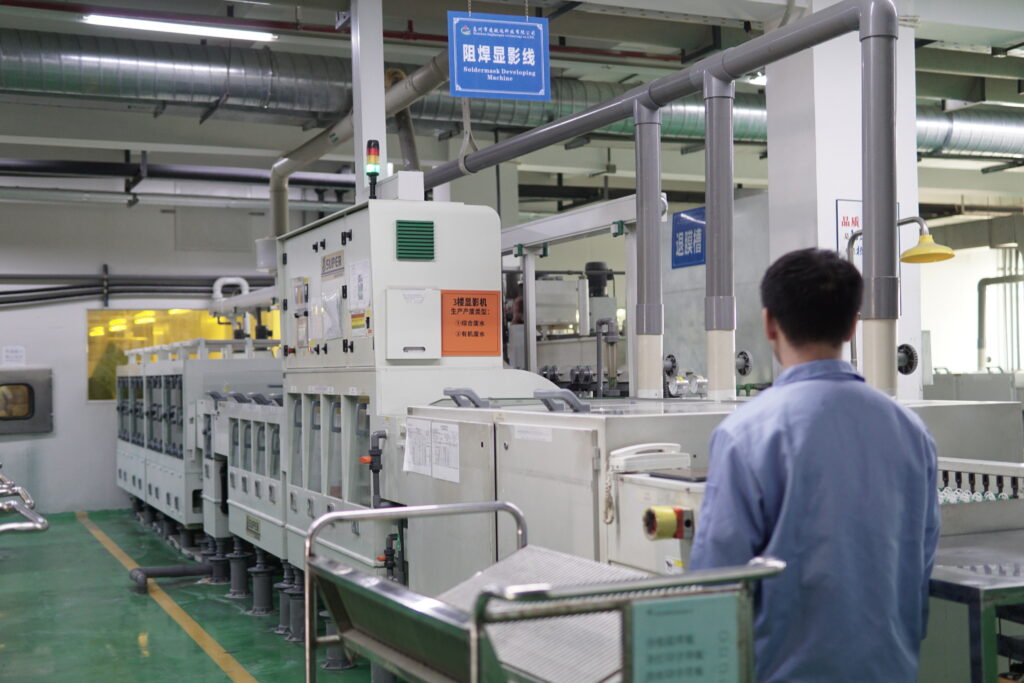
Main Functions of Solder Mask
Soldering Protection
The solder mask creates a separation between component pads so the solder paste won’t flow and create shorts while providing better stability on the reflow and wave soldering. It also improves soldering uniformity, because the shape of the solder joints is more controllable and some defects such as bridging, solder spikes, and cold joints can be reduced. In high-density packaging (BGA, QFN, etc.), the solder mask is even more crucial in precisely determining the volume of solder.
Anti-Oxidation and Contamination Prevention
The solder mask air-tights and keeps out moisture and chemicals, which minimizes oxidation on the copper and favorizes storage and working life. It also protects flux residue, salt spray, sweat and other contaminant from sticking on the copper surface, which results in the corrosion led electrical failure. In long-service applications (outdoor units, industrial machinery), the life-predicting factor is often the protective performance of the soldermask.
Electrical Insulation
Material that make up the solder mask are also insulating, which prevents leakage between traces and makes the circuit more stable in high voltage or high speed signal environment. For high-speed applications, the solder mask may also affect impedance control and its thickness and dielectric constant contribute to signal integrity. On multi-layer board edges or on densely routed areas, it boosts significantly the overall electrical safety margins.
Structural Protection
After the curing, the solder mask ink becomes solid, which minimizes the possibility of scratches, abrasion, and mechanical damages and brings enhancement on PCB durability. It also shields copper traces from mechanical impact during plug-in, assembly and transportation and decreases the wear of jig and instrument. For the flexible PCBs, the solder mask can provide more bending resistance and the surface strength.
Improved Appearance and Identification
Various solder mask colors are also able to enhance the appearance of PCB and facilitate manual inspection, rework and visual alignment. Color contrasts also contribute to enfoque fines traces and pad defects, that allows to better AOI detection. In branded goods, the color of the solder mask is sometimes a distinguishing factor on the product line or to tout the craftsmanship and quality.
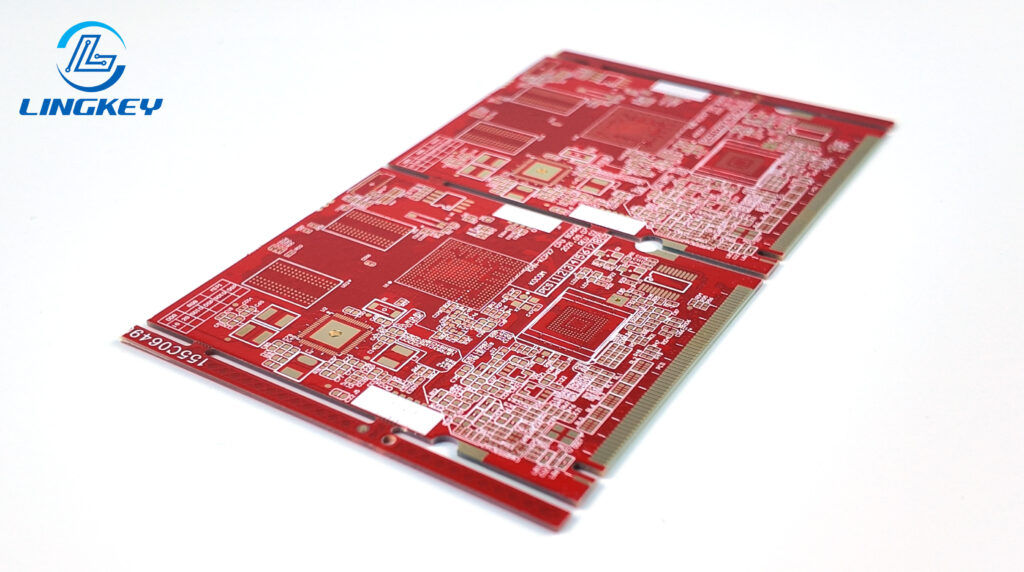
Types of Solder Mask and Their Process Characteristics
LPI (Liquid Photo-Imageable) Solder Mask
As the most popular process at present, LPI has high accuracy and can be applied in HDI board, high density assembly and fine pitch component. Because of LPI’s excellent levelling and good coverage properties, consistent thickness of film can be achieved on complicated circuits and multilayer structures. The photo exposure and development process results in high controllable open dimension to support pad pitches down to 0.1—0.15 mm or less. Furthermore, LPI possesses excellent adhesion, heat resistance and soldering heat resistance, and can be subjected to multiple reflow cycles and severe assembly process. Consequently, it is the mainstream in consumer electronics, automotive electronics, servers, and other high end industries.
Inkjet Solder Mask
This is a dry-filmless process which is very consistent, environmentally friendly and good for prototyping as well as fast-turn production. The inkjet technology directly print solder mask according to the PCB design, which allows for precise local thickness control, flexible processing and less wastes in comparison with conventional methods. It has obvious benefits for irregular board shapes, variable designs or jobs that shall be modified quickly in solder mask pattern. InkjetSM reduces also further manual processing steps and enhances pattern uniformity growth prior to AOI inspection and is gaining traction for applications in 5G products, rapidly evolving consumer electronics, and small-batch pilot production.
Dry Film Solder Mask
Continued use in certain niche applications such as high-reliability military and aerospace equipment, but not mainstream. Dry film solder mask provides very uniform film thickness and good dielectric characteristics, for designs that need a tight control of the electrical parameters of the solder mask. It also resists multiple chemicals processes without foaming or peeling off, making it a continuous asset in aerospace, military, and high voltage apparatus. Even though process costs are higher and flexiblility is lower than with LPI, dry film is irreplaceable in applications where extreme reliability is required or in harsh surroundings.
Available Solder Mask Colors (Provided by LingKey)
- Green (Default and Most Stable)
- Black (Common in Consumer Electronics)
- White (Ideal for LED and Lighting Applications)
- Blue / Red (Visible and Easy to Differentiate)
- Yellow / Purple and Other Custom Colors
All colors comply with RoHS / REACH environmental requirements.
LingKey’s Solder Mask Manufacturing Capabilities
- Minimum solder mask dam width as low as 3 mil
- High-definition exposure systems ensure sharp and accurate pattern edges
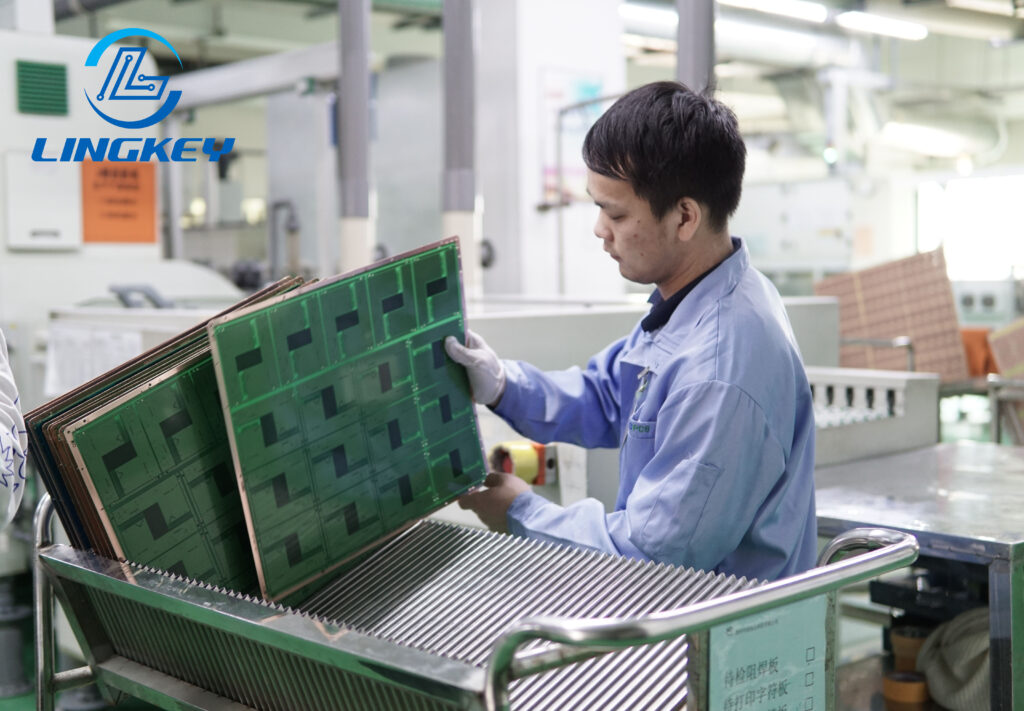
- Strict control over ink filtration, degassing, coating, and curing
- AOI (Automated Optical Inspection) used to guarantee consistency and defect-free imaging
- Multiple solder mask color options available
- Supports high-speed, high-density, automotive-grade, and industrial-grade PCBs
Density of multi-layer boards, automobile electronic or smart device, LingKey provides stable and reliable high precision solder mask performance.
Conclusion
The soldermask is an essential factor that influences PCB manufacturability, reliability, and soldering quality. It not only protects copper traces and makes soldering more stable but also beautifies the board and makes visual was clearer.
LingKey has high process control and quality control based on international-standard to make our customers satisfactory with long life and high precision solder mask solutions. From high density HDI boards and fine-pitch components to high volume manufacturing, we make sure every PCB meets the highest standards for performance and appearance, helping you to provide reliable, consistent manufacturing support for your customers’ electronics.