Ceramic PCB Material
A ceramic PCB is a type of high-quality PCB that utilizes a ceramic substrate like aluminum oxide (Al₂O₃), aluminum nitride (AlN) or silicon nitride (Si₃N₄) as the base material.
The material used for ceramic PCB substrates differs from that of traditional PCBs. Ceramic matrix composites can rival aluminum matrix composites in thermal stability, but at a significantly higher cost. This characteristic makes ceramic substrates well suited for components that need to maintain low temperatures or operate in solid-state environments.
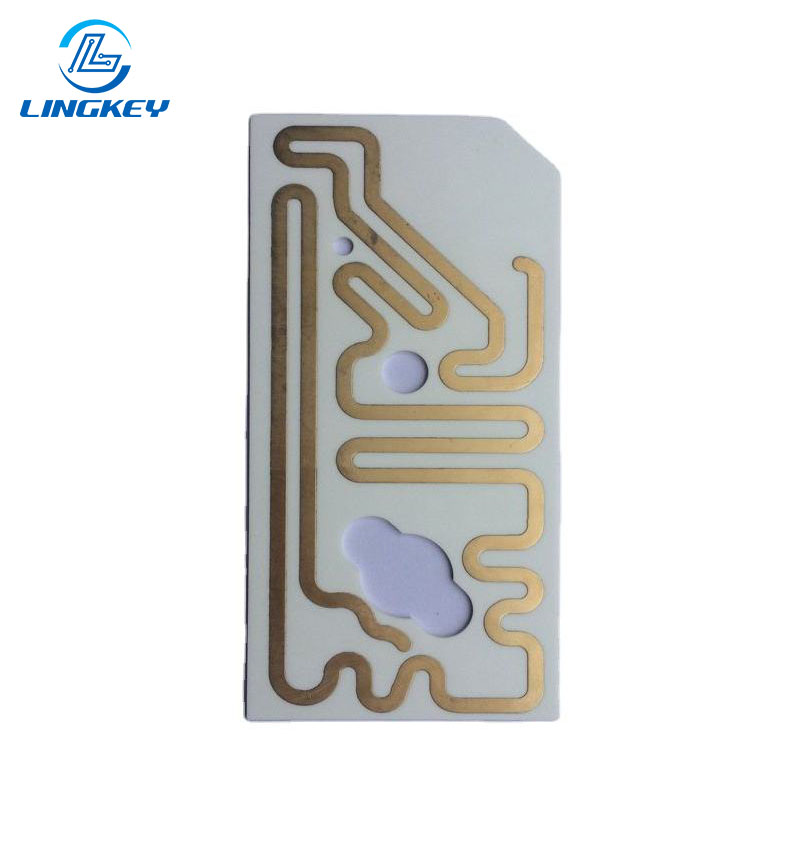
Main Features of Ceramic PCB Materials
1.Thermal Conductivity in Effect
Ceramics have excellent thermal conductivity, far superior to that of standard FR4 substrates.
For example, aluminum nitride (AlN) has a thermal conductivity of 170–230 W/m·K, enabling rapid and efficient heat transfer and dissipation from electronic components, thereby significantly improving system cooling performance and operational stability.
2.Excellent Electrical Insu-lation
Ceramics are naturally very good insulators of electricity. They have stable electrical properties even at high temperature/voltage-stable enough to prevent electrical breakdown, short circuit, and leak (these faults are your enemy!) – they make your circuit safe and reliable.
3.Exceptional thermal stability
Due to the stability of ceramic substrates at temperatures as high as 800°C, they are well-suited for applications requiring extreme heat including reflow soldering, power modules, LED packaging, and automotive electronics.
4.CTE Matching with the Semiconductor Materials
Meanwhile the thermal conductivity of aluminium nitride is superior to all other ceramic materials solids in 2 D and 3D packagings, the CTE of the ceramics is quite close to that of the silicon chips, which helps to reduce thermal stress induced deformation of the package and silicon chip and solder joint cracks, and thus significantly improves packaging reliability and product life.
5.High Strength and Corrosion Resistance
Ceramic materials possess high mechanical strength and excellent chemical stability. They are resistant to water, oil, and chemical contamination, allowing them to maintain their integrity and performance over the long term, even in the most extreme environments.
6.Advanced manufacturing process compatibility
Ceramic substrates can be processed by various manufacturing techniques including DBC (Direct Bonded Copper), AMB (Active Metal Brazing) and LTCC (Low-Temperature Co-fired Ceramic) techniques, to satisfy different power, frequency and reliability demands in high-end electronics applications.
Common Types and Differences of Ceramic PCB Materials
The raw material composition and the application requirements dictate that the ceramic PCB materials are essentially divided into three categories: Aluminum Oxide (Al2O3), Aluminum Nitride (AlN) and Silicon Nitride (Si3N4).
Material thermal conductivity, strength, cost and suitable applications are unique to each material.The following is a detailed comparison:
1.Aluminum Oxide (Al₂O₃) Ceramic Substrate Features:
The lowest cost and cost effectiveness the most widely utilised ceramic substrate.thermal conductivity is about 20~30 W/mK, which is applicable to electronic products of medium and low power.
Good mechanical strength and electrical insulation properties.high stability and good machinability suitable for mass production.
Remarkable Application:
Home appliance control boards, lighting circuits, consumer electronics and general power modules.
2.Aluminum Nitride (AlN) Ceramic Substrate Features:
High thermal conductivity of 170–230 W/m·K, close to that of metallic aluminum.suitable for use in high-frequency circuits owing to the low dielectric constant value, which enables stable signal transmission.
A close match to silicon chips in terms of coefficient of thermal expansion (CTE) which guarantees high reliability.more expensive and more complex to make.
Typical Applications:
High power modules, RF, LED packaging substrates, 5G communication devices, aerospace and military electronics.
3.Silicon Nitride (Si₃N₄) Ceramic Substrate Features:
High thermal conductivity (≈80–100 W/m·K) and good mechanical strength are combined.high flexural strength and excellent thermal shock resistivity.
Suitable for high vibration, high temperature, heavy load conditions.the cost is higher than Al₂O₃, but lower than AlN, providing a balanced overall performance.
Common Applications:
Power modules for new energy vehicles, industrial drive systems, high-speed train control units and avionic systems.
Applications of Ceramic Substrates
Thanks to the good thermal conductivity, heat-resistant, insulating and mechanical performances, ceramic materials are favored by the electronics, power, automotive and industrial control sectors.
1.Power Electronics and Modules
Applicable to IGBT modules, power modules, inverters and other high-power electronic products.
Efficient heat dissipation and long-term reliability can be achieved in a high power environment.
2.LED Lighting and Display
It is used as substrate for LED packaging to enhance the efficiency of thermal management.
Increases the lifetime of LED while improves the areal luminous efficiency and reliability.
3.Automotive Electronics and New Energy Vehicles
Used in battery management systems (BMS), motor controllers, charging modules, etc.
High temperatures, vibration and moisture can all be withstood, allowing for optimal vehicle safety and performance.
4.RF and Microwave Circuits
In high-frequency communications, radar, 5G base stations, and other similar products.
Low dielectric loss for stable high speed signal transmission.
5.Aerospace and Military Electronics
Flight control systems, avionics modules, and military radar.
Maintaining high reliability and long-term stability even in extreme environments.
6.Industrial Control and Medical Equipment
Industrial automation control boards, precision sensor modules.
Medical instruments remaining stable and reliable under high temperature and high humidity conditions.