Through-Hole Assembly
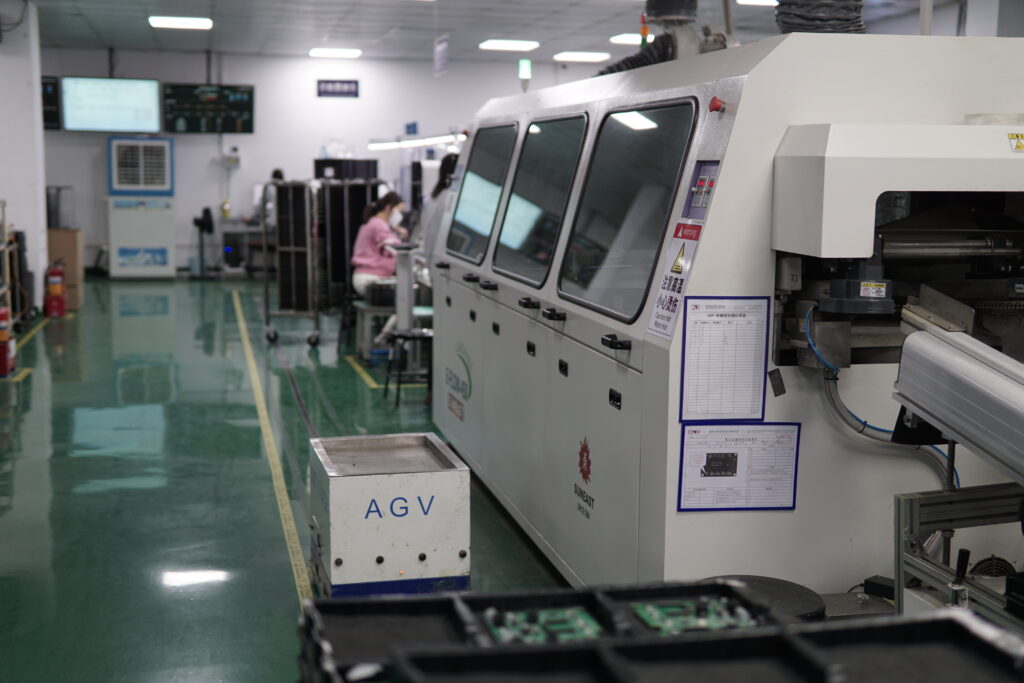
In addition to advanced surface mount technology (SMT), our company also possesses mature through-hole assembly (THT) processes. Through-hole assembly involves precisely inserting component leads into corresponding holes on a printed circuit board (PCB) before soldering to create electrical and mechanical connections.
THT Manufacturing Process
1. PCB Manufacturing and Drilling
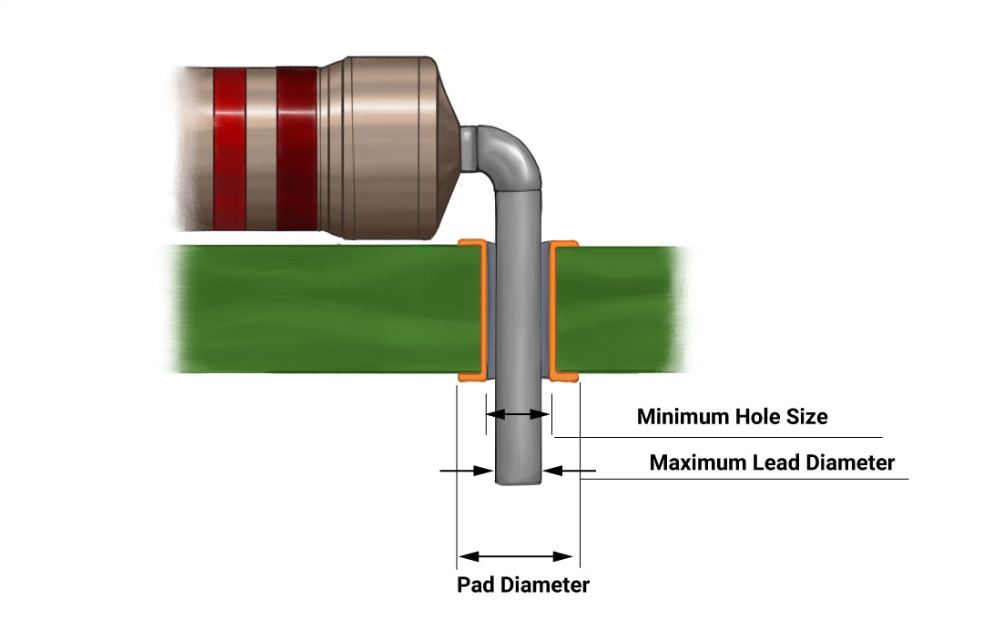
During the PCB production stage, engineers will drill holes in the circuit board based on Gerber files, drilling files, and other information. These holes are then electrolessly plated with copper to create a conductive layer on the inner walls.
2. Component Insertion
To ensure optimal soldering, component leads are first shaped, cut, and cleaned. There are two methods of insertion: manual insertion, where experienced workers manually insert components into corresponding holes on the PCB (suitable for small batches); and automated insertion, where AI-powered insertion machines are used, which are highly efficient and suitable for large-scale production.
3. Soldering Process
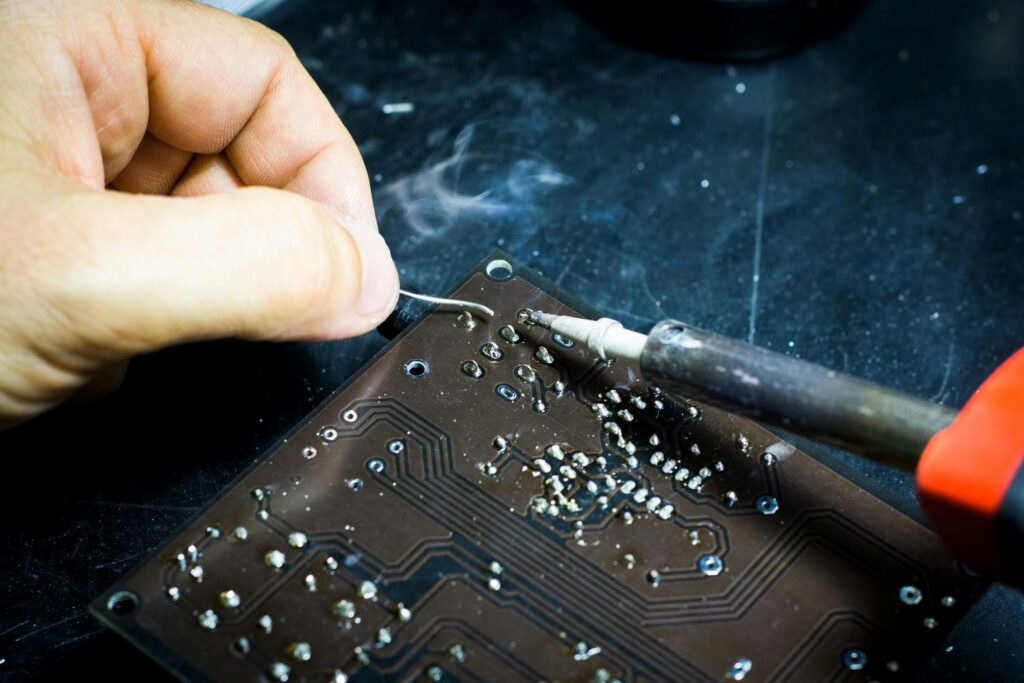
There are three common soldering processes: wave soldering: After component insertion, the PCB is preheated by spraying solder resist, then a molten tin wave is applied to simultaneously complete all solder joints, achieving extremely high efficiency; selective soldering: using a mixed assembly process of surface-mounted metal (SMT) and thermally-mounted metal (THT); and manual soldering, suitable for small batches and specialized component soldering.
4. Cleaning
After soldering, trim excess component leads to the appropriate length. Use a chemical solution or water to clean the solder paste to remove flux residue and impurities.
5. Inspection and Quality Control
Our company utilizes multiple inspection methods, including visual inspection, automated optical inspection, X-ray inspection, and electrical performance testing, to ensure that every circuit board meets stringent quality standards.
Comparison between THT and SMT
THT (Through Hole Assembly) | SMT (Surface Mount Technology) | |
Component installation method | Insert the pins of the components into the PCB holes and solder them | Components are mounted directly on the pads of the PCB. |
Mechanical strength | High mechanical strength, suitable for large components | Small solder joints and low mechanical strength |
Applicable components | Suitable for transformers, large capacitors, connectors, high-power components, etc. | Suitable for capacitors, resistors, IC chips, small packaging components |
Electrical performance | Suitable for high current and high voltage applications | More suitable for high signal and low power applications |
PCB design requirements | Drilling required | No need to drill holes, more flexible design, supports high-density boards |
Production efficiency | Plug-ins are slower to install than mounting | Highly automated, fast placement speed |
Space utilization | The components are large and take up a lot of space | High density and high integrated circuits can be achieved |
SMT and THT mixed assembly capabilities
We not only have high-speed, automated SMT placement production lines, but also have mature THT through-hole assembly technology. Through SMT and THT mixed assembly, we can achieve the advantages of high-density placement and high-power installation on a single circuit board to meet customer needs.
Our Advantages
Full Process Coverage:
We can process everything from tiny surface mount components to large through-hole devices.
Flexible Production:
We support small-batch trial runs, large-volume mass production, and multi-mix orders.
Quality Assurance:
We adhere to stringent testing procedures and comply with international standards such as IPC and ISO.
Industry Applications:
We serve a wide range of industries, including communications equipment, aerospace, automotive electronics, and medical devices.