Impedance Control
Resistance, capacitance, and inductance all affect signal transmission on a circuit board, forming characteristic impedance. These factors can cause signal reflections, interference, electromagnetic crosstalk, and distortion within the circuit board, ultimately degrading product performance. Impedance Control, through design and process adjustments, controls the routing of signal lines on a PCB to maintain a target impedance value, thereby ensuring signal quality.
The Importance of Impedance Control
Ensuring Signal Integrity
Precise impedance control eliminates signal reflections and distortion, ensuring stable and clear signal waveforms during transmission, thereby improving overall circuit performance.
Improve the performance of high-speed transmission
For high-speed signal circuit such as USB, HDMI, PCIe, Ethernet, etc., impedance control is the key to make high-speed data stable transmission.
Reduction of EMI interference
Proper impedance matching can significantly reduce signal reflection and radiation noise, and further decrease electromagnetic interference, improving system EMC.
ncreasing Product Reliability
With stable and consistent impedance control, the electrical performance of each PCB is more uniform, which improves product reliability and consistency in mass production.
Key Factors Affecting Impedance Accuracy
Obtaining accurate and stable impedance is a multi-variant material and process dependent parameter that must be controlled through:
Dielectric Constant (Dk) Stability
The type of base material and the content of resin influence the dielectric constant, which has a direct effect on the impedance.
Dielectric Thickness Tolerance
Small differences in dielectric thickness may lead to considerable impedance variations.
Trace Width and Etching Tolerance
Over-etching or under-etching modifies the shape of the copper trace and leads to impedance variations.
Copper Surface Roughness
Copper roughness greatly influences the transmission of high frequency signals and is related to the impedance characteristics.
Solder Mask Effect (Outer Layers)
Solder mask thickness and dielectric properties influence the impedance of the microstrip traces on the outer layers.
Tight control of these parameters is necessary to produce reliable and consistent impedance in the fabrication of PCBs.
Impedance Control Procedure
Design
Impedances are defined according to circuit interface standards (e.g, USB, HDMI, PCIe and Ethernet) for stacking and fabricating.
Add Your Heading Text Here
The number of layers for the PCB stack, dielectric thickness, the given dielectric constant (Dk), copper thickness and other relevant construction parameters can be selected to achieve desired target impedance.
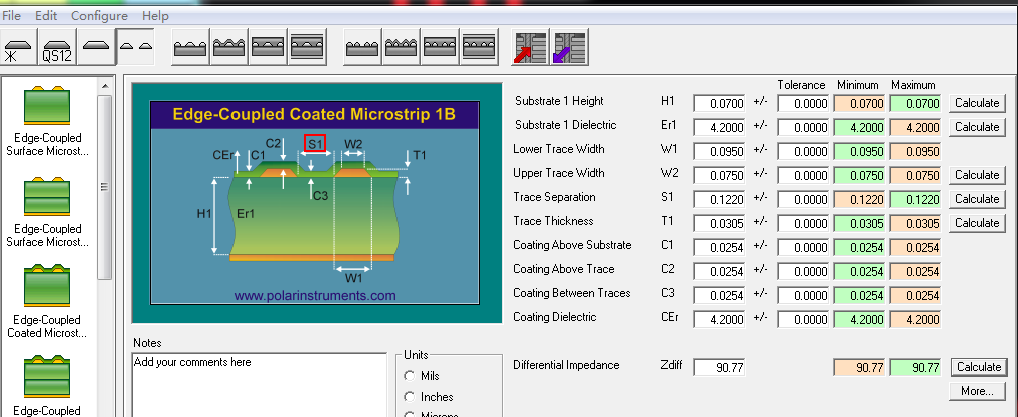
Simulation and computation
Employing a professional impedance calculation software, with high precise simulation calculation, to ensure the design value equals the theoretical impedance.
Manufacture Control
During the production of circuit boards, the manufacturers have to tightly monitor process tolerances of etching, lamination and copper thickness control in order to keep the stability of real impedance.
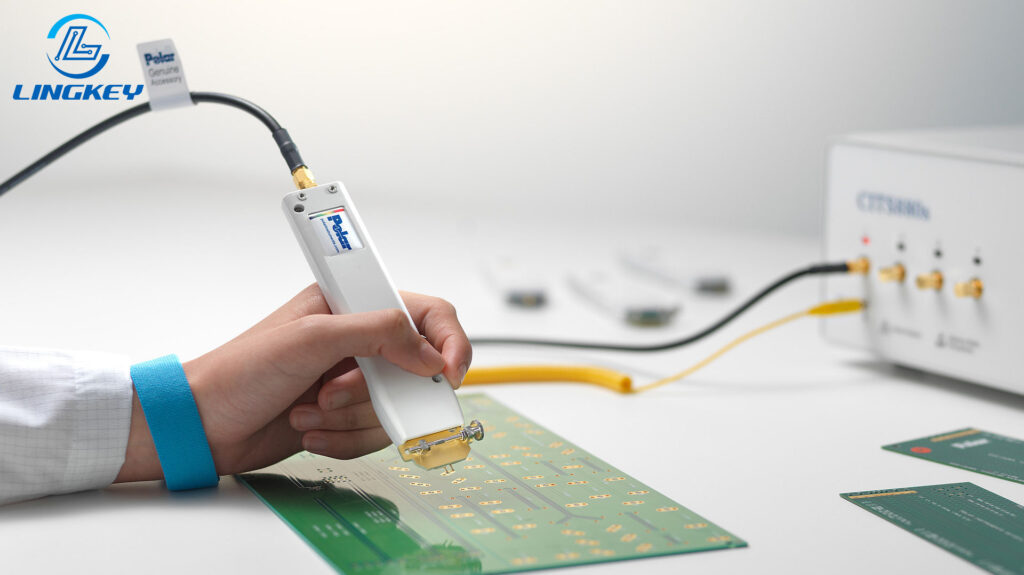
Impedance Test
A PCB sample is measured by a time domain reflectometer (TDR) while observing the evolution of the impedance of the signal in the transmission medium to identify if it meets the design rules and the requirements of the customer during the transmission.
Conclusion
As a required quality assurance technique for the modern PCBA manufacturing, X-Ray inspection can identify deep soldering and structural faults in location that regular examination methods cannot reach. This allows for higher product reliability, safety and uniformity. With the packaging of electronic components being looking at miniaturization and high density, the need ofX-Ray inspection will just increase in importance.
At LingKey, we pursue the perfection in manufacturing technologies. With state of the art X-Ray inspection systems and dedicated engineers we offer the most complete and accurate hidden-joint inspection solution to your needs, enabling verification for each PCBA that can be tailored for use in high speed, high reliability applications. Drawing on our expertise in technology and manufacturing, LingKey will bring even more stable and efficient electronic manufacturing solutions to our customers.