A.O.I
Automated optical inspection (AOI) is a visual quality control method used to identify potential errors during PCB manufacturing and assembly. AOI uses a camera to scan circuit boards, inspecting for surface defects such as stains, scratches, breaks, and shorts. It can also check for missing, incorrect, and misplaced components.
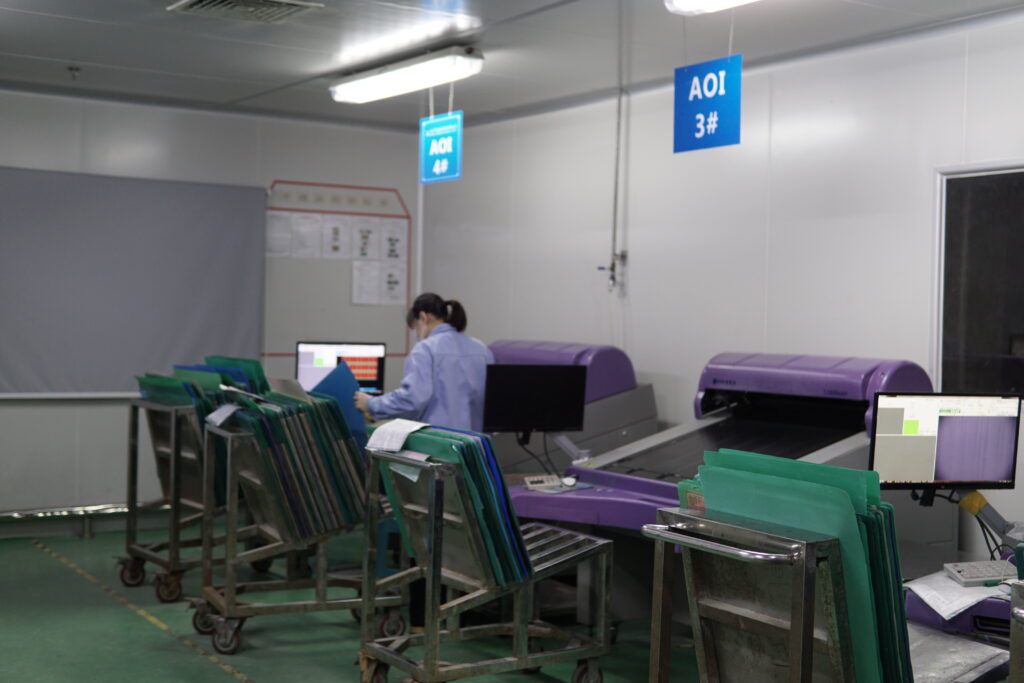
How does AOI work?
AOI systems utilize lighting, machine vision cameras, high-resolution image processing software, and automated inspection. Using optical vision principles, they photograph circuit boards, identify them, and determine if they contain defects.
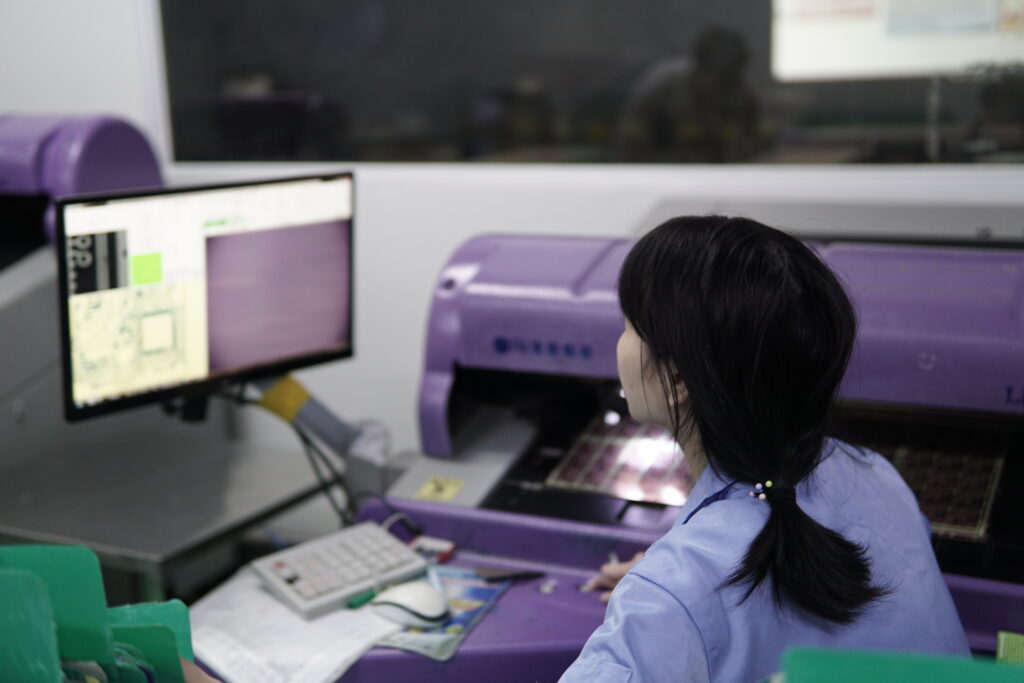
1. Lighting System
AOI systems require uniform optical fiber and a clear field of view to accurately identify the features of each component. Most AOI machines now use LED lighting modules. LEDs not only provide stable optical fiber but also achieve more uniform illumination through the use of different colors (red, white, green, and blue).
The lighting angle is also crucial. During the PCB assembly process, optical fiber can be blocked by taller components, preventing it from reaching lower components. Therefore, AOI systems must be equipped with light sources at various angles to ensure adequate illumination throughout the inspection area.
2.Machine Vision Cameras
Automated Optical Inspection cameras capture product images and transmit them to the AOI system’s processing module for analysis.
3. Processing Software
Product specifications and standards must be entered into the AOI system as a reference during the inspection process.
Advantages of AOI
1.Fast Inspection Speed
AOI can complete the inspection of an entire circuit board in a very short time, significantly improving efficiency compared to manual inspection.
2.High Inspection Accuracy
AOI can accurately detect minor solder joint defects, component misalignment, shorts, and opens on PCBs.
3.Data Capability
AOI inspection systems automatically save inspection images and defect reports, providing data support for quality analysis.
Disadvantages of AOI
1. Time-consuming programming and debugging
Inspection flexibility is limited; each change requires reprogramming. New defects cannot be identified, and only pre-programmed defects can be detected. Pre-programming takes a long time to prepare.
2. Inability to detect hidden defects.
AOI can only detect surface defects and cannot detect defects in packages with pins hidden on the bottom, such as BGAs and QFNs.
3. Prone to misjudgment.
Appearance variations (such as reflections, color differences, and solder paste thickness) can cause the system to misjudge, requiring manual review and impacting efficiency.
AOI Applications
AOI is widely used in the electronics manufacturing industry.
PCB Inspection: AOI is used to inspect pads, solder quality, and circuit connectivity.
SMT Inspection: Detects component placement, offset, polarity errors, and pin shorts.
Welding Quality Inspection: AOI can inspect solder connection quality, including pad quality, solder volume, and solder defects.
Defect Detection and Classification: AOI can detect and classify various defects, including shorts, opens, over-soldering, and component misalignment.