Polyimide
Polyimide(PI) is a high-performance polymer with best heat resistance and excellent flexibility as well as the best electrical insulation material. Since it is light, reliable, and has good environmental adaptability, polyimide is ideal for use in flexible printed circuit boards (FPC) and electronics that should withstand high temperature, bending, dynamic motion, or space limitation.
It is one of the key core substrate materials for the current flexible and high reliable electronic solution manufacturing.
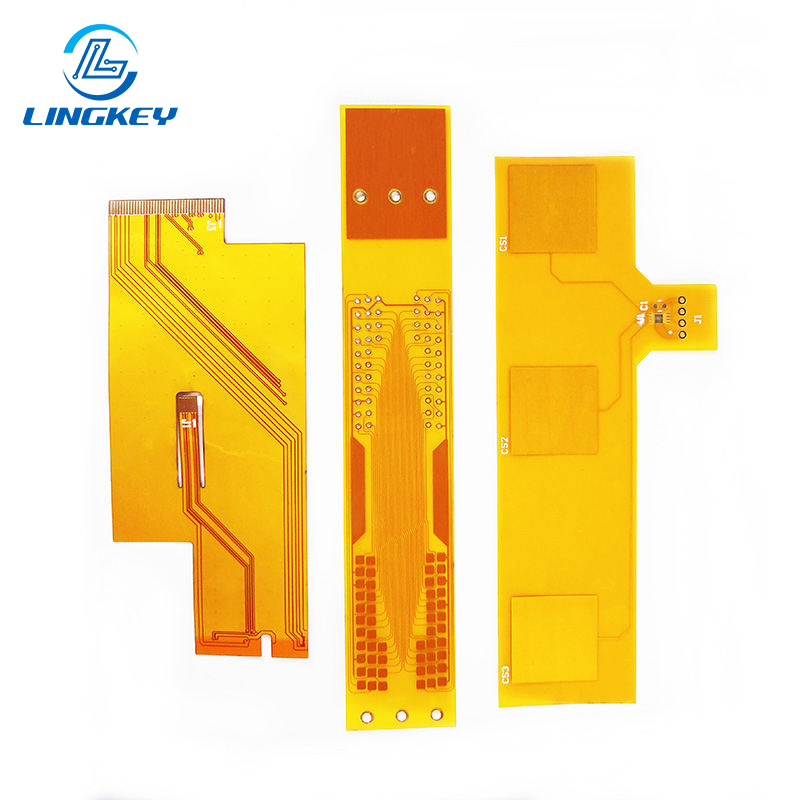
Advantages of Polyimide (PI) Materials
Excellent High Temperature Resistance
Polyimide can be used to be stable for long time at high temperature of 200°C ~ 260°C without softening, decomposing and performance degradation, and can be subjected to thermal treatment such as reflow soldering, hot pressing and laser processing, etc. This is why PI is one of the best material options for high temperature electronics.
Excellent Flexibility and Bending Fatigue Life
PI-based materials are extremely flexible and can be folded or bent many times without cracking. Its long-term bending stability exceeds that of the other flexible substrates, making it suitable for FPC, foldable devices, dynamic interconnect structures, and wearable electronics.
Superior Electrical Insulation and Dielectric Properties
High insulating strength, low dielectric constant and low dielectric loss make PI stable in conductor in high speed and high frequency signal transmission, and the signal integrity of circuit and electric magnetic interference intensity is improved greatly.
Excellent Chemical and Environmental Stability
PI is highly resistant to water, oil, radiation, solvent, and a number of other chemicals. It also does not break down or age under stress over time, which makes it applicable for use in harsh industrial environments, in space and in high moisture environments.
Ultra-thin, Lightweight, and Miniaturization-Friendly
The polyimide can be processed into a very thin but strong film material and has good dimensional stability. This enables miniaturization, low weight and high circuit density for future electronics.
High Mechanical Strength and Durability
PI has high tensile strength, tear resistance and mechanical stability in general. It offers flexibility and structure in flex circuits and in flexible assemblies for dynamic or high-reliability environments.
Design Considerations When Using Polyimide
In the design of the flexible printed circuit board (FPC) or rigid-flex PCB based on polyimide materials, it is necessary to consider structure, bending capability, processing as well as the long term reliability to make sure that the product performance is stable during product life cycle.Keep in mind:
Bending Area Design
Avoid running traces in regions that experience long-term dynamic bending, particularly at tight corners or right angle bends.
The bending radii shall be properly designed according to copper thickness, layer number, and anticipated bending times.
Use curved routing instead of acute 90° angles.
For high-quantity bending applications (such as jumpers cables, FFC/FPC connectors), non-adhesive FCCL is the best option.
Copper Thickness & Layer Stack-Up Control
Thicker copper decreases flexibility and the chance of cracking
For precision or high dynamic applications choose the ultra-thin copper (1/3 oz 1/4 oz) options.
Adhesive layers can reduce the heat and reliability performance of the materials; use adhesive-free PI copper laminates when the application allows.
Recommended Routing Guidelines
Traces ride should be perpendicular to the bending direction.
Don’t stack traces in multiple layers on the same bend area.
Widen the conductor and keep air gaps constant to reduce stress concentration.
Do not place vias in bending areas, if absolutely necessary laser micro-vias are.
Reliability & Insulation Considerations
Polyimide absorbs moisture to a considerable extent, thus pre-baking is necessary.
Allow adequate insulation clearance for high voltage or high density circuits.
For outdoor or high-moisture environment conditions, use coverlay + protective coating.
Manufacturing & Process Notes
Verify the rating of the thermal resistance of the PI films for the processes e.g. reflow soldering.
Do not over-punch mechanically; it is better to use laser cutting.
Perform bending fatigue tests according to expected life in service.
For high-end/long-life products, attach the reports of stress simulation and durability testing.