Manufacturing tolerances
Manufacturing tolerance is the acceptable variation in the dimensions, location or performance of a product, during its manufacture.
In the manufacturing of PCBs, tolerance is the range of error allowed between the actual measured value and the designed value.
In other words, “zero error” in dimensions is not achievable in production, the tolerance defines the range of allowable errors.
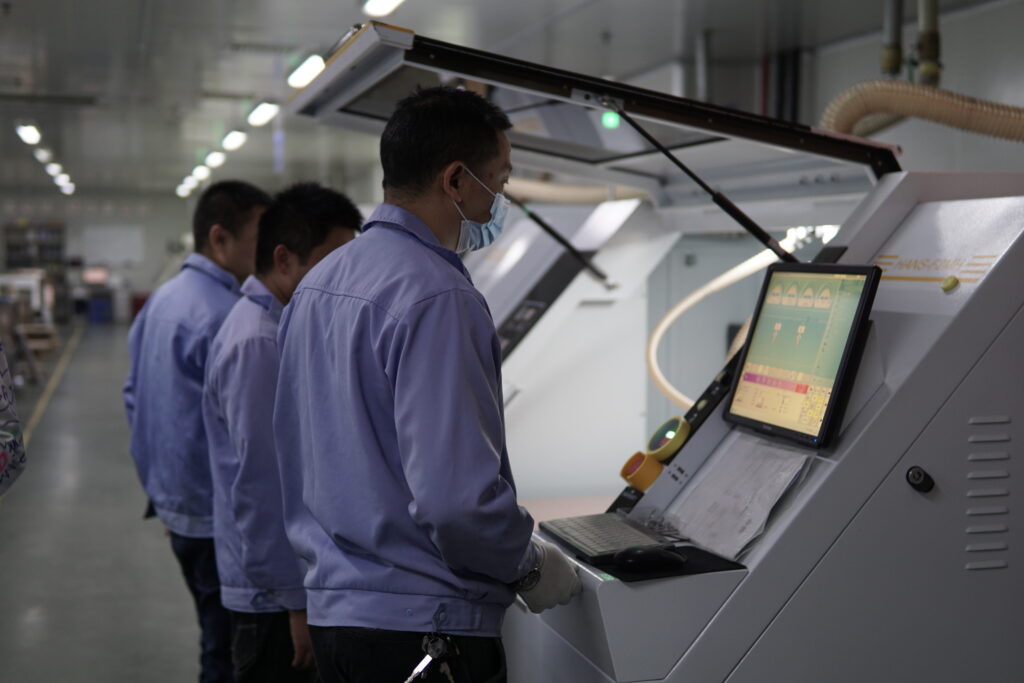
The Importance of Tolerancing in PCB Fabrication
1. Product Consistency Assurance
Appropriate tolerances are defined to keep parameters such as dimensional, hole location, copper thickness, etc., same on every board.
2.Accuracy of product assembly
Strict control of tolerance guarantees that component placement, soldering, housing assembly are all accurate avoiding misalignment and assembly problems.
3. Reducing Defects
Production efficiency can be improved by minimizing the production of defective products and the re-work of products when production tolerances are always within normal range.
4. Stable Electrical Performance
For high precision PCBs (e.g. high speed or high frequency), the tolerance of line width and line spacing affects directly the impedance and signal integrity.
Common PCB Manufacturing Tolerances (Typical Values)
The tolerance levels vary in different PCB structures. Below is a typical set of tolerance that are applied for today’s PCB manufacturing:
Board Thickness Tolerance
• Standard FR4 (1.0–2.0 mm): ±10%
• HDI and high-precision boards: ±0.08–0.12 mm
Ensures proper mechanical fit and consistent impedance.
Finished Copper Thickness Tolerance
• 1 oz copper: ±10%
• Heavy copper (3–6 oz): ±15%
Copper thickness influences current carrying capability and heat performance.
Hole Size Tolerance
• Plated through hole (PTH): ±0.075 mm
• Non-plated hole (NPTH): ±0.05 mm
Precise hole tolerance ensures correct component mounting and mechanical reliability.
Line Width and Line Spacing Tolerance
• Standard PCB (≥4 mil): ±10%
• HDI fine lines (2–3 mil): ±10–15%
These tolerances directly affect impedance control and routing density.
Profile Dimension Tolerance (Board Outline)
• CNC routing: ±0.1 mm
• Laser cutting (for flex): ±0.05 mm
Ensures consistent assembly fit and enclosure compatibility.
Impedance Tolerance
• Standard: ±10%
• High-speed applications: ±5%
Controlled impedance is crucial for USB, PCIe, HDMI, RF and 5G circuits.
These data give the designer a good practical guideline for rule selection in design and help to avoid errors during fabrication.
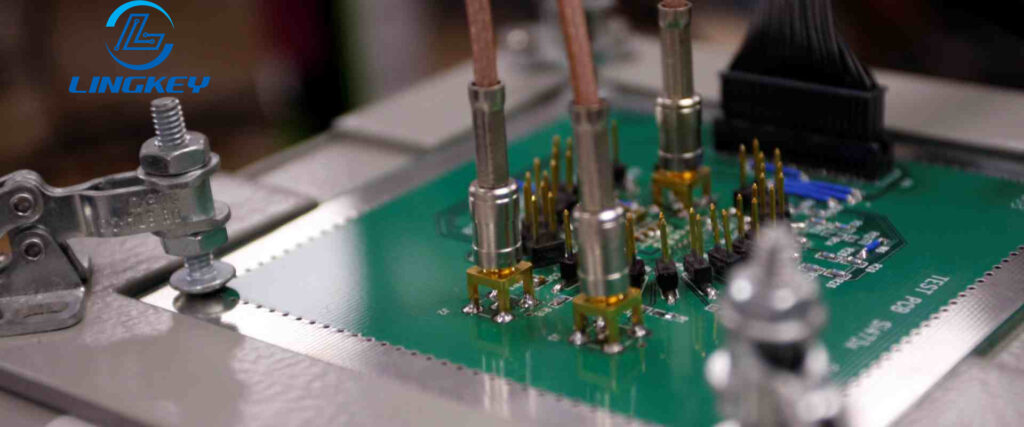
Our advantage
Compliance with International Tolerance Standards (IPC Class 2 / Class 3)
All are products are in line with global manufacturing tolerance standards such as around IPC Class 2 and Class 3. This provides a consistent level of reliability, durability and quality that satisfies the industrial, automotive, aerospace and other high reliability markets.
High-Precision Drilling and Etching Equipment
We run sophisticated drilling and micro-etching systems that provide tight tolerances, clean profiles and stable yields. This high level of equipment and accuracy enables us to support complex stack-ups and fine-pitch routing for today’s electronic designs.
Process-Level Quality Control
Every process of production is under strict quality control, including material selection and the final inspection. By minimizing variation at each step of the process, we are able to provide stable dimensional accuracy, predictable impedance, and consistent electrical performance.
Support for high-speed,high-Density,and High-precision assemdly
Our technology and process are well suited to the transmission of high-speed signals, HDI structure, and assembly of small-pitch parts. This enables our PCBs to be applied in the high-end fields such as servers, communication equipment, industrial control, automotive electronics and the next generation smart device.
How Designers Can Optimize for Better Manufacturing Tolerances
Manufacturers are largely dependent on designers to ensure that a PCB is manufacturable to the required tolerances. The following optimization procedures are useful in increasing the success rate and stability:
Use Manufacturer-Approved Design Rules
Adhering to the DFM/DFT guideline leads to no features beyond the production limit and it results higher yield.
Avoid Extremely Fine Line Width/Spacing Unless Necessary
Very fine traces (2–3 mil) increase cost and reduce yield. Designers should save them only for HDI or high speed routing requirements.
Match Hole Sizes to Standard Drill Tables
Using standard drill diameters allows tighter tolerances and results in less cost for tooling.
Maintain Adequate Annular Ring
Providing adequate annular ring without overkill serves to prevent breakout and keep the via reliable, more so for multilayer designs.
Provide a Clear Impedance Requirement
With stack-up, Dk/Df data, and tolerance goals, the fabricator is able to precisely tune dielectric thickness and trace geometry.
Optimize Panel Utilization
Correct PCB size allows for optimal use of the panel and minimizes variation in dimensional tolerance during routing or V-cut. With a focus on manufacturable design, customers are able to reduce cost, production quality can be stabilized, and electrical performance is predictable, even in the most difficult application or high density application.
Quality Assurance
At LingKey PCB, quality is our business policy. We enforce rigorous quality control throughout the entire process from material inspection to finished product delivery so that every PCB can be manufactured according to the international standards and customers’ requirements. Every material is fully traceable and compliant and processes critical to their product such as drilling, plating, imaging and etching are SPC and AOI controlled for tenable dimensional and electrical results. 100% of all PCB are E-tested and Visually inspected prior shipping, also we perform reliability verifications (impedance-test, micro-section analysis, solderability testing and surface treatment checking) to guarantee long-term performance.
Highly reliable PCBs for high-speed, high-density, and mission-critical applications in a wide range of industries are provided by LingKey with its integrated quality management system and constant improvement.