Reverse Engineering
Reverse engineering involves disassembling a product (such as a circuit board, electronic device, or mechanical part) and analyzing its components and their interrelationships to determine its design and manufacturing principles. This investigation also allows for information about the product’s manufacturing process. In electronics manufacturing, reverse engineering is widely used for analyzing, replicating, optimizing, and redesigning printed circuit boards (PCBs).
Main Contents of PCB Reverse Engineering
Appearance and Structural Analysis
Disassemble the circuit board and observe and record information such as the number of layers, material, dimensions, and surface treatment.
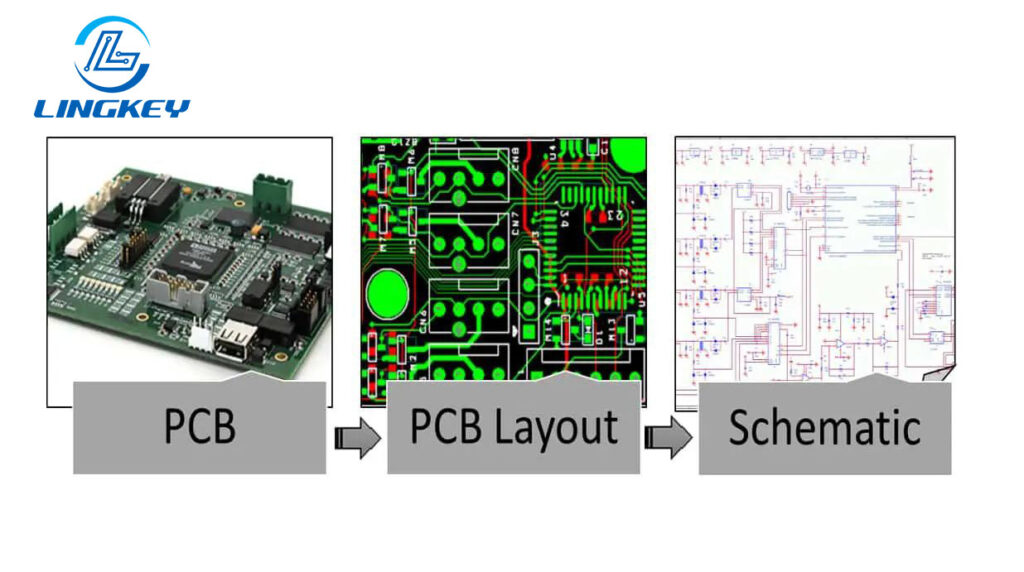
Circuit Scanning and Drawing Reconstruction
Use specialized equipment to scan each circuit layer, extract the underlying circuit wiring image, and recreate the schematic and Gerber file.
Component Identification and Bill of Materials (BOM) Creation
Test and identify component parameters such as resistors, capacitors, and chips, and create a BOM.
Functional Analysis and Design Improvement
Analyze the operating principles based on the circuit wiring logic, and optimize or upgrade the original design with new features.
Sample Reproduction and Verification Testing
Reproduce, assemble, and test the PCB based on the reconstructed file to ensure functionality consistent with the original design or that new features are operational.
Reverse Engineering Application Scenarios
Reverse engineering has a wide range of applications in electronics manufacturing and R&D, primarily in the following areas:
Loss of original design files, requiring PCB redo
When the original Gerber, BOM, and schematic files are lost, reverse engineering can be used to scan and analyze the existing PCB, quickly restoring the original complete design data and enabling re-production.
Competitive Circuit Research and Performance Analysis
We analyze and dissect similar competitive circuits in the market to understand their design logic, functional implementation, and key component layout, helping you improve and innovate your products.
Maintenance and Upgrades of Old Products
Reverse engineering the PCB design data of discontinued or obsolete products to restore them, enabling companies to perform product repairs, compatible replacements, and functional upgrades, extending the product’s lifespan.
Design Optimization and Cost Control
Reverse engineering existing circuits to analyze existing designs for potential optimization opportunities, thereby reducing production costs and improving reliability and performance.
Learning and technical research purposes
Engineers can use reverse engineering to learn electronic design concepts and circuit structures. This can be used for teaching, R&D, and new product verification.
LingKey’s Reverse Engineering Strength
The Humanized Task: At LingKey, we offer full service PCB reverse engineering, accuracy tailored for reproduction, evaluation, and innovation. With the high-end scanning system, high precision layer analysis tools and professional engineer, we can reconstruct the whole gerber file with very high accuracy including schematics and BOM. Whether you need to retrieve lost design data, analyze competitive products, upgrade obsolete equipment, or balance cost and performance, LingKey provides trustworthy, cost-effective, and completely auditable reverse-engineering services. We perform rigorous quality review and verification testing to make sure that every duplicated or redesigned PCB functions as well as or better than the original design, enabling our clients to develop products faster and gain more competitive edge in the market.