PCB and IC design and their key integration in modern electronic products
Introduction
The way ICs and PCBs function are the same in all electronic devices. When regarding products like phones, laptops, or even smart home appliances, these technologies allowed engineers to create very small, dependable, and powerful systems. But for the PCBs need to provide mechanical support and electrical routes to a large number of electronic components, ICs are processed by semiconductor technology to perform specific function at a very high speed. Understanding what pcb vs ic is, their benefits, manufacturing, and their function allow us to understand why they have very different- yet complementary- roles in electronics.
What is a Printed Circuit Board (PCB)?
Definition and Basic Structure
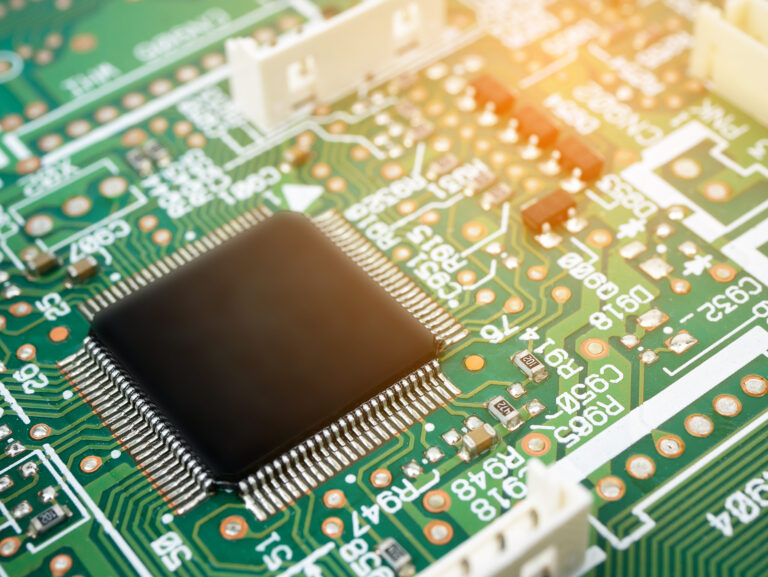
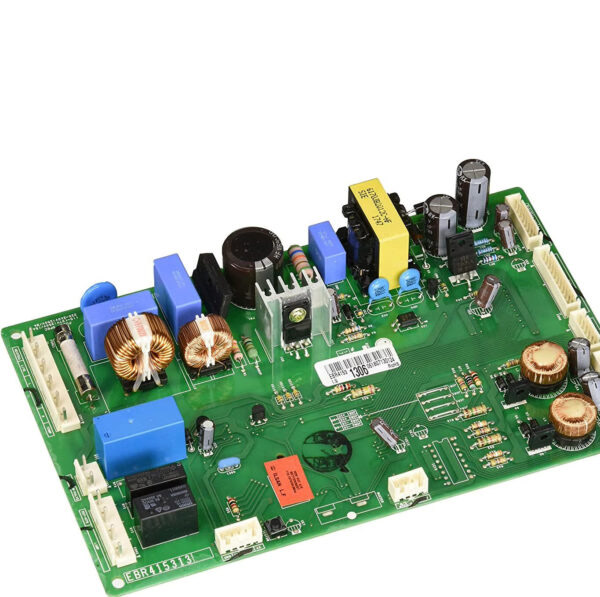
The PCB is the platform for assembling the components and the whole device. It’s a base on which you can solder individual components such as resistors, capacitors and of course, ICs are mounted here too. Pcb allows all signal and power connections need to meet the equipment, so the device as required has been working.
PCB Structure Highlights:
- Substrate/Base:Usually fiberglass (FR4), provides rigidity and heat dissipation.
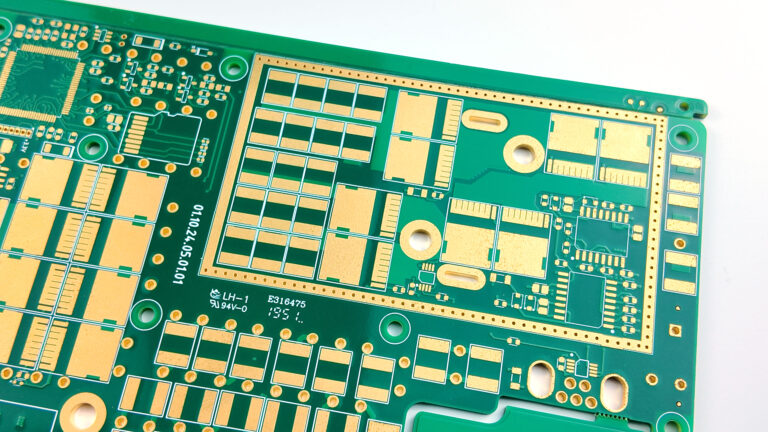
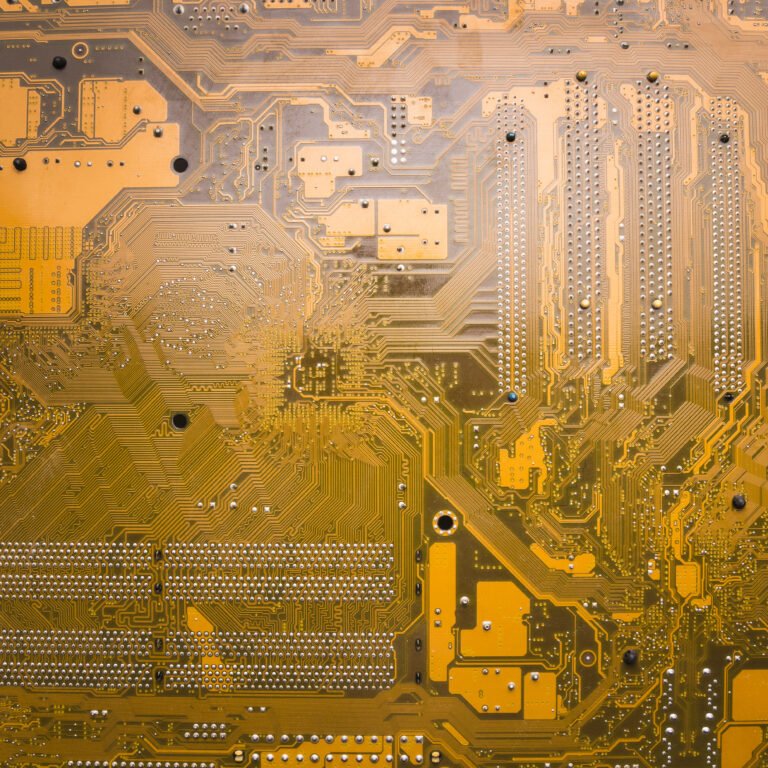
- Copper Traces:Create electrical connections between components.
- Solder Mask:Protects traces from oxidation and accidental shorts.
- Silkscreen:Used for labeling and aiding assembly, especially in pcba (PCB Assembly).
Boards are important for passive functions, but also as a conducting sheet that enable complex electronic circuits.
Key Components of a PCB
- Traces:Act as pathways for signals and power.
- Vias:Connect traces across layers in multi-layer PCBs.
- Pads:Allow mounting of components onto the pcb using through-hole technology or surface-mount technology.
- Connectors:Interface with other devices.
- Mounting Holes:Mechanically secure the board in a case or chassis.
Types of PCBs by Layer Count and Flexibility
Layer Count:
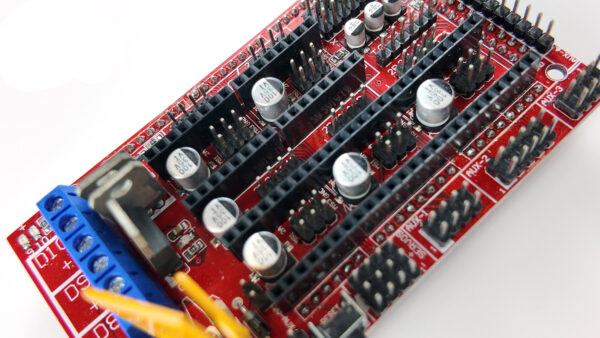
- Single-layer:All traces on one side, used for basic devices.
- Double-layer:Traces on both sides, allows for more complex designs.
- Multi-layer:Found in everything from smartphones to servers and supercomputers, supports extremely complex circuits.
Flexibility:
- Rigid PCBs:Standard in most applications.
- Flexible PCBs:Used in wearables, cameras, and foldable devices.
- Rigid-flex PCBs:Combine both, supporting intricate device layouts.
Key Features and Applications of PCBs
- Well-designed PCB:Ensures reliability, minimizes signal interference, manages heat dissipation, and simplifies assembly.
- PCB provides flexibility in pcb design focuses on space, thermal, and routing considerations.
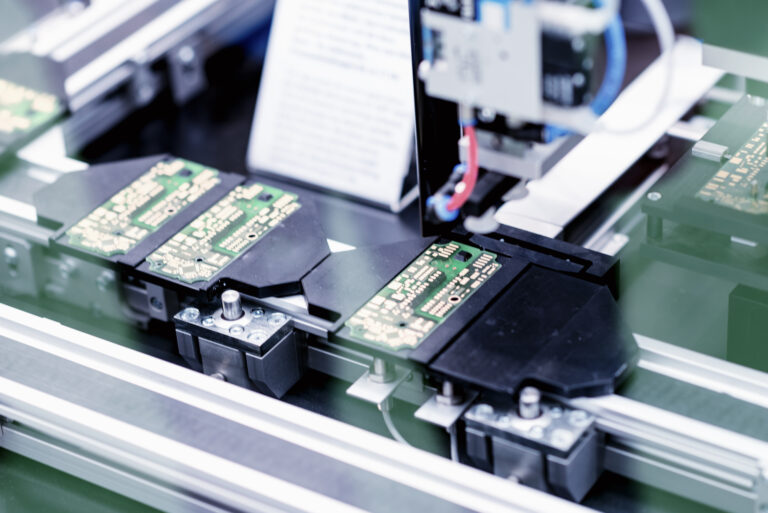
- PCBs are produced through automated systems, which allow to mass production of consumer devices.
PCB Applications:
- Mobile phones, laptops, tablets (devices like smartphones)
- Medical equipment
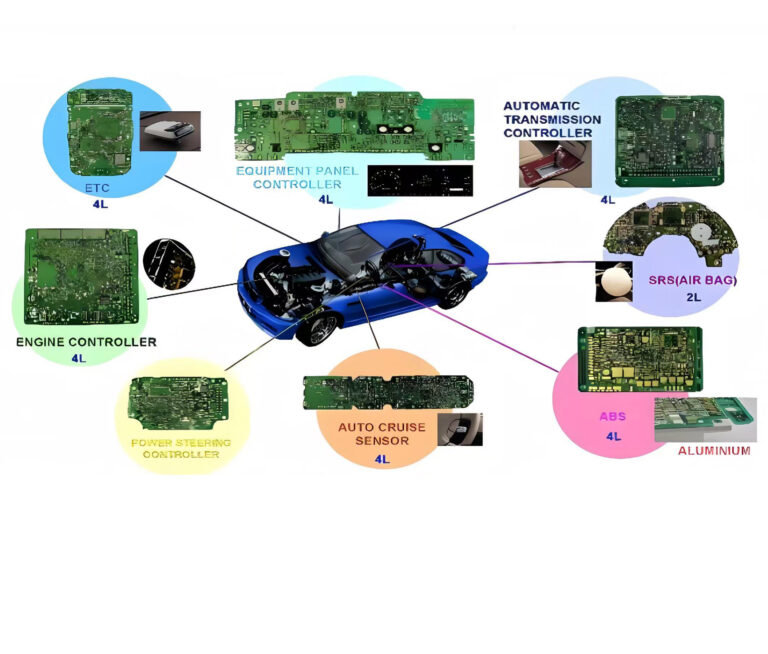
- Automotive control units
- Industrial automation
- Aerospace navigation units
What is an Integrated Circuit (IC)?
Definition and Basic Structure
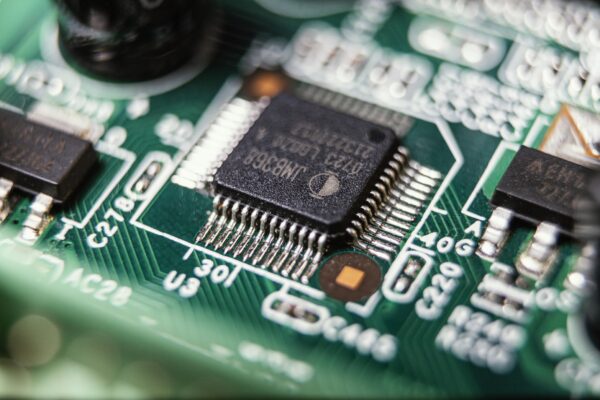
An Integrated Circuit (IC), or “chip,” is a tiny chip on which multiple component types are manufactured using semiconductor wafers. ICs pack a lot of power into a tiny space. They hold millions — or sometimes billions — of tiny transistors on a single chip. This kind of integration enables IC solutions to perform complex logic and memory functions that previously required entire boards of discrete components.
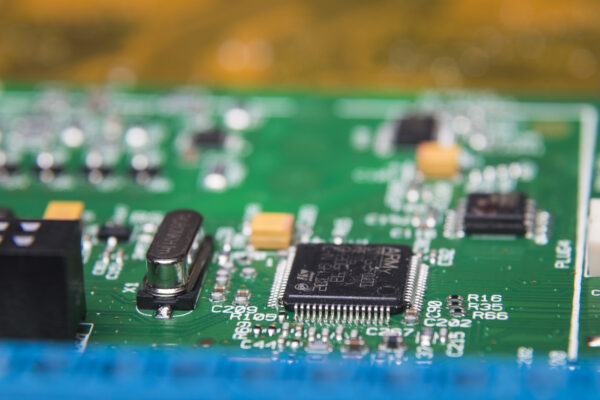
IC Internal Components
ICs are developed based on the principles of modern semiconductor physics. The building blocks such as transistors, resistors, and capacitors are embedded at the microscopic level:
- Transistors:Fundamental for logically switching or processing data or amplifying signals.
- Capacitors & Resistors:For stabilization and regulation.
- Interconnects:Micron-scale metallic pathways linking components onto the chip.
- Encapsulation:Black epoxy or plastic package for protection.
Types of ICs by Function and Integration Level
Function:
- Digital ICs:ICs process the binary data to calculate, perform logic functions, and store it in memory.
- Analog ICs:Process continuous signals for tasks such as audio amplification, or power supplies regulation.
- Mixed-Signal ICs:Bridge analog and digital, crucial for devices like smartphones.
Integration Level:
| Integration Level | Components onto a single chip | Examples |
| SSI | Up to hundreds | Simple logic gates |
| MSI | Hundreds to thousands | Decoders, counters |
| LSI | Thousands to tens of thousands | Microprocessors |
| VLSI | Hundreds of thousands to billions | CPUs, SoCs |
Key Features and Applications of ICs
- Extremely compact, enabling “components onto a single chip”
- Highly reliable thanks to microscopic manufacturing tolerances
- Huge impact in memory storageand processing, powering everything from smartphones to industrial robots
IC Applications:
- CPUs, GPUs, SoCs (single chipcomputing)
- Audio and signal amplifiers (perform specific tasks like audio)
- Memory modules (memory storage)
- Power management (perform specific tasks like voltage regulation)
Key Differences Between PCB and IC
Comparison Table: PCB vs IC
| Category | PCB (Printed Circuit Board) | IC (Integrated Circuit) |
| Function | PCB ensures support, connectivity for components | Performs specific digital or analog functions |
| Structure | Large, flat board (rigid/flexible, multi-layer) | Tiny chip built from semiconductor wafers |
| Components | Mounts multiple components | Packs components onto a single chip |
| Complexity | Scalable; can be simple or very complex | ICs are highly complex, can contain millions or even billions of transistors |
| Repairability | Can replace individual components | Chips must be replaced if faulty |
| Cost | Varies by design and volume | High design/R&D cost, very cost-effective at scale |
| Application | Used in every electronic device | Used for specific functions within a device |
Purpose and Function
PCBs are important because they serves as the backbone for every electronics device, attention to pcb design vs functional requirements such as signal integrity, thermal performance, mechanical stability and spatial layout. In contrast, ICs are designed to be specific purpose—from very simple logic operations to very complex data processing and memory storage, all on a single chip.
Physical Characteristics and Complexity
- IC vs circuit board:An IC is a chip that is millimeters thick and centimeters long, whereas PCBs can be full-device-sized.
- ICs and PCBs differ in the way complexity is managed: ICs pack millions of transistors for specific functions; PCBs connect and house multiple components, some of which are ICs.
PCB vs IC Manufacturing Process Steps
| Step | PCB (Printed Circuit Board) | IC (Semiconductor Chip) |
| Design | Layout traces and place various electronic components onto the PCB using CAD tools | IC design focuses on arranging billions of transistors and other components onto a single chip using specialized EDA software |
| Material Preparation | Glass epoxy or other substrates are cut and drilled | Ultra-pure silicon ingots are sliced into thin semiconductor wafers |
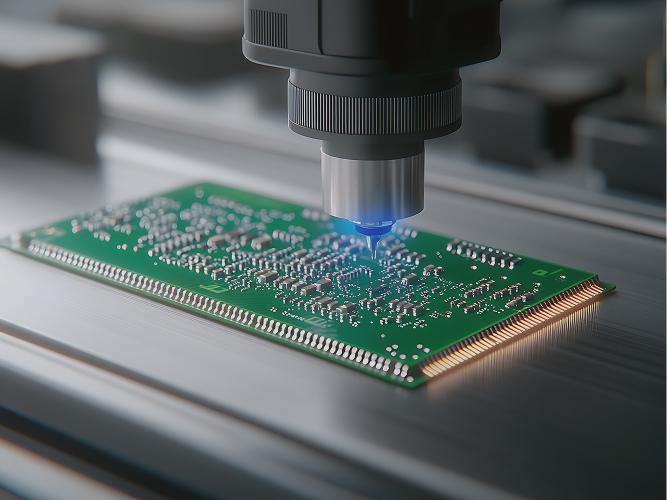
| Patterning | Copper layers etched using photographic and chemical processes | Photolithography projects circuit patterns onto wafers at the nanometer scale |
| Assembly | Components like transistors, capacitors, ICs, and connectors are mounted onto the PCB using surface-mount and through-hole technology | Multiple components are integrated internally—ICs are not assembled but manufactured as a single entity |
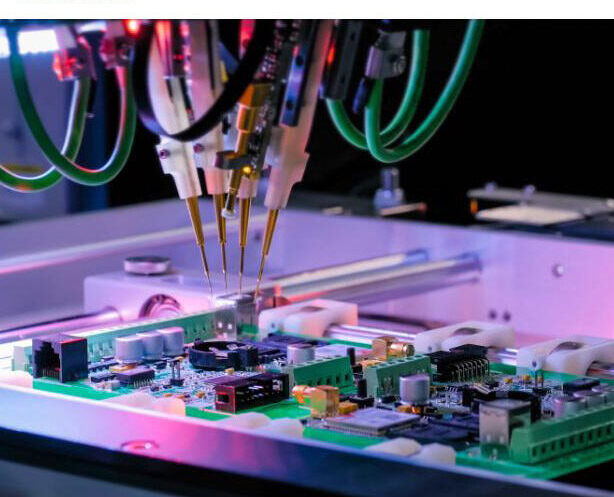
| Testing/Inspection | Electrical test of traces, function, continuity, and placement | Probe test, electrical test, wafer sort (each die on wafer is checked) |
| Packaging | Not packaged; entire PCB is used as-is | Each IC is cut (“diced”) from the wafer and encapsulated in a protective case for integration |
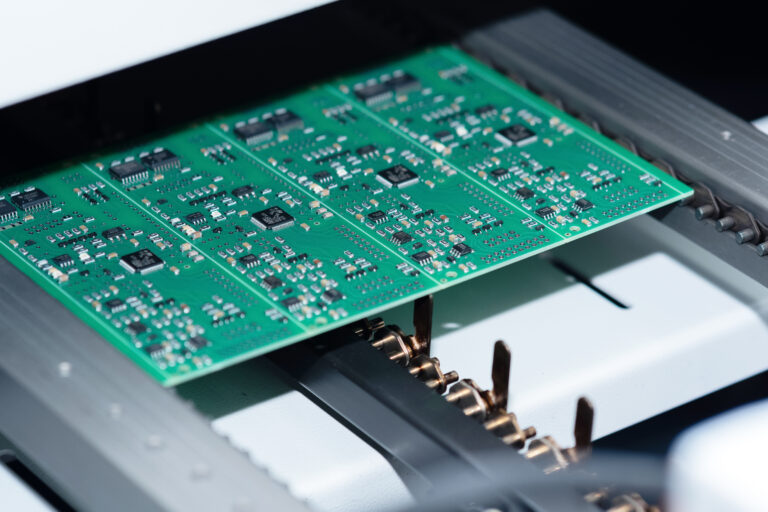
| Integration | PCBs are assembled (PCBA) into final electronic products, with careful consideration for heat dissipation and signal routing | Packaged ICs are mounted onto PCBs, often performing specific tasks like memory storage, data processing, or power regulation |
Notable differences:
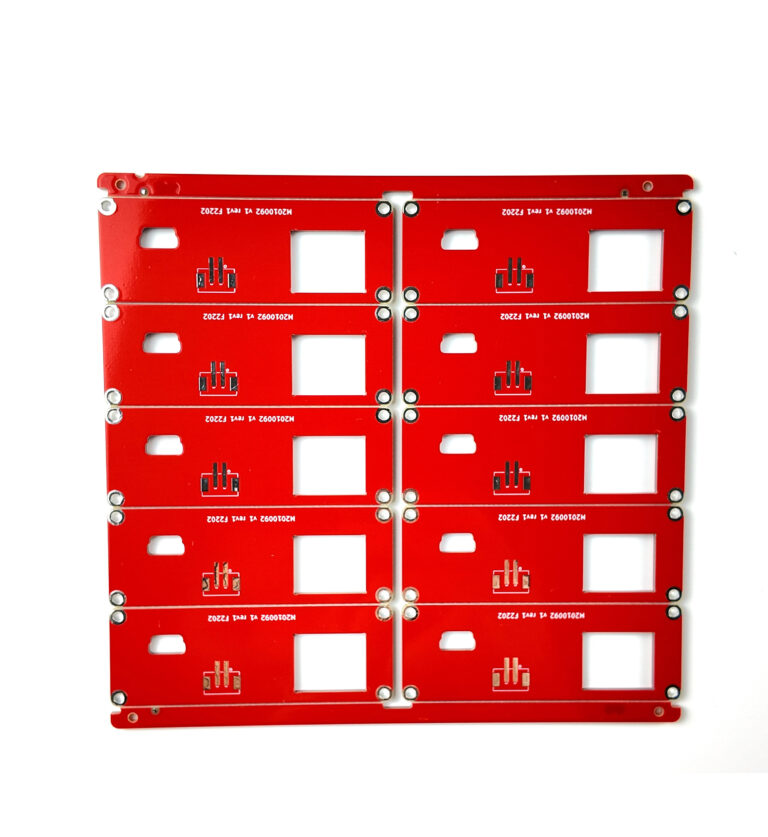
- PCBs are produced with high efficiency panel process that is suitable for mass production of different components.
- ICs are produced from semiconductor wafers through atomic-scale fabrication processes for both analog and digital circuit
Today’s electronics manufacturers, such as LingKey, integrate the latest technologies in PCB fabrication and assembly with rigorous process control to deliver predictable high reliability, tight component integration, and system level consistency of product quality even for highly complex electronic systems.
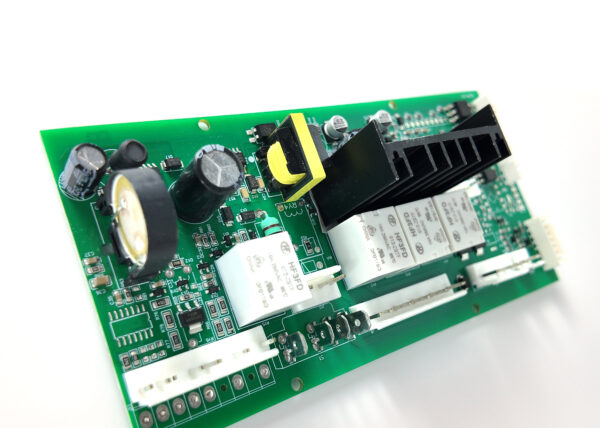
PCB vs IC Cost Comparison
The cost comparison of PCB and IC is multifaceted and largely depends on the size and functionality of production:
PCB Costs:
- Prototyping is reasonable for simple designs, but the prices increase with number of layers, miniaturization and complexity.
- Large boards are necessary for complex devices, and multi-layer, high-density boards can be costly.
- PCBA(Printed Circuit Board Assembly) adds to costs, especially for small runs.
IC Costs:
- The R&D and mask set costs for a custom IC are high—sometimes in the millions of dollars—so custom ICs are only cost-justified for high-volume products.
- The cost per IC, when the IC is mass produced, becomes negligible even for chips that contain millions or billions of transistors.
| Criteria | PCB | IC |
| Startup/Tooling Cost | Low to moderate | Very high (custom masks for each design) |
| Per-unit Cost for Low Volume | Low to moderate | Extremely high (often prohibitive) |
| Per-unit Cost for High Volume | Scales down, but less dramatic than IC | Falls dramatically (pennies per chip) |
| Repair/Replacement | Often possible, replace individual components | Whole chip must be replaced (not repairable!) |
| Suitability | Flexible for design iteration | Ideal for mature, mass-manufactured products |
Summary: PCBs are necessary and economical at both low and high volumes, while ics are only highly economical at scale, which is why single chip solutions power nearly every electronic device we use.
How PCBs and ICs Work Together
The collaboration between ICs and PCBs is the heart of modern electronics.
- ICs are mountedonto the PCB using automated processes (PCBA).
- The PCB providesconnectivity, power distribution, and mechanical support.
- Electronic circuits are then created by connecting ICs to other electronic components—capacitors, resistors, sensors—on the
- Such as smartphones, multi-hing smartphones use rigid flex pcbs including multiple high-density ICs, with each performing specific processing or support functions.
In high complexity systems, a motherboard and ICs work together optimally — the motherboard provides routes for power and information, and the ICs are specialized functional blocks that handle specific jobs, such as processing data or amplifying signals.
In practice, what is needed for a good IC and PCB to mate well in application is good design and good fabrication and assembly. Established companies such as LingKey also offer consultation to assist in PCB layout, component positioning, and assembly to maintain stable performance and well integrated system solutions.
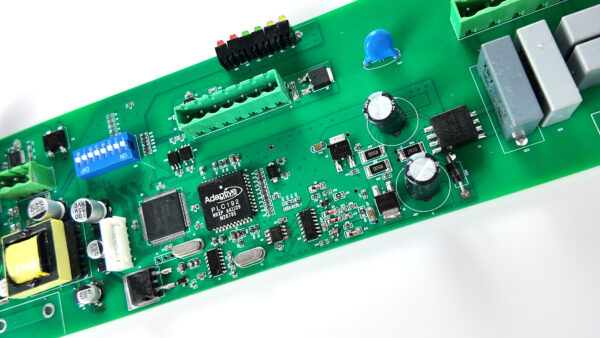
Applications and Use Cases
Understanding pcb vs ic differences and applications helps illustrate their unique and complementary roles.
PCB Applications
- Structural backbone and power network in all electronics—boards are essentialfor any assembly.
- Integration of multiple electroniccomponents for control, user interface, communication, and more.
- Customization in automotive, aerospace, medical, and industrial applications.
IC Applications
- ICs are incrediblydiverse—found in CPUs, GPUs, RF modules, audio amps, memory.
- High-end IC solutions for everything from memory storage to AI acceleration, to communicating analog and digital signals as needed.
- Chips that perform specific tasks—from sensor signal conditioning to high-speed computations.
Combined Use Cases
- PCBs and ICs work in tandem to power everything from smartphones to smart home devices, laptops, cars, and industrial automation — the design vs the needs of each application dictate chip selection and board layout.
- The ICs are placed on motherboards or application-specific boards that are then systemized as modules or subsystems.
Future Trends and Developments
PCB Future Trends
- Greater emphasis on heat dissipation, miniaturization, and flexibility.
- PCB layout is more focused on mixed-signal and high-speed with smaller traces and smaller pitch components.
- Integration with advanced manufacturing like 3D printing and AI-driven optimization.
IC Future Trends
- Shrinking transistor sizes—contain millionsor billions of transistors per device.
- New ic solutionsaimed at low-power IoT, AI, and neuromorphic computing.
- Chips specialized for analog or digital functions, including those for data processing, signal amplification and advanced sensor inputs.
- ICs are highly specialized tailored for performance, power efficiency and emerging computation models.
FAQs: PCB vs IC Differences and Applications
Can PCBs contain ICs?
Absolutely ICs are mounted on to PCBs as a central processing, memory or interface chip in every electronic device.
Why can’t ICs be repaired like PCBs?
ICs are produced on a semiconductor wafer with components so small and packed so tightly that if one doesn’t work the entire chip has to be replaced—not like PCBs, where individual components can be repaired or replaced.
Which is more cost-effective for mass production?
ICs triumph on scale—the more you make, the cheaper each one is. PCBs are produced with readily available affordable techniques, but the per-unit discount for ICs at enormous scale is unsurpassed.
Can PCBs be designed without ICs?
Yes, particularly for simple, analog-only circuits – but for complicated, highly-integrated products, ics and pcbs together are a must.
How do PCBs and ICs handle continuous and binary signals?
Analog IC operate on continuous signals (such as audio), and digital IC work on binary data. PCBs also provide a seamless connection between these for hybrid designs.
What determines the choice between using a PCB or an IC for a function?
It is not all or nothing! PCBs are important infrastructure, and ICS are just functions—pick your chips for processing, memory or analog, then design boards around them.
Are PCBs and ICs interchangeable?
No, they play very different roles at a fundamental level: pcbs are necessary for support and connections, ics are specialized in processing integrated.
Conclusion
ICs and PCBs—although often compared—are not substitutes but partners. PCBs are the skeleton and nervous system of just about every electronic device and ICs are the muscle and organs that do work at mind-boggling speeds and efficiencies. The same is true for ICs, which have the power to transform the technology from a room-sized mainframe to the smartphone in your pocket, and a well-designed PCB makes the best of the multiple components its holds.
If you are deciding on your next device, troubleshooting a problem, or are simply curious about what is “under the hood,” understanding the advantages and distinctions of PCB and IC brings a new perspective in electronics.
Moreover, collaborating with a trustworthy PCB fabricating and assembling vendor is crucial to take full advantage of the performance of the PCBs and ICs. LingKey offers one stop solution of PCB manufacturing and pcb assembly service with solid engineering support and rigorous quality control, enabling customer to transform sophisticated electronics design to robust, high performance product.