Lead-Free PCB Assembly & RoHS
Introduction
The necessity for lead free PCB assembly is more critical now than ever with the global adoption of more stringent environmental standards in electronics manufacturing. Global regulations and consumer pressure have forced the traditional tin-lead solder industry to evolve into the modern lead-free solder industry. It is not just a matter of meeting legal requirements, but an opportunity to protect the environment, reduce worker exposure to hazardous materials and contribute to providing an electronic industry whose products are safe for the users of their gadgets around the world.
In this guide to lead-free PCB assembly, you will understand how SMT lead-free PCB assembly is processed, what kind of materials and process are necessary for the reliability, how the manufacturer could meet ROHS standard and much more.
As a professional pcb manufacturer, LingKey offer dependable lead free pcb assembly and rohs pcba manufacturing services to customers worldwide. With state of art SMT lines , stringent process control and international environmental standard full adhered, LingKey assured high quality, environment friendly electronics manufacturing in consumer electronic, automotive, industrial control, telecommunication and more.
What is Lead-Free PCB Assembly?
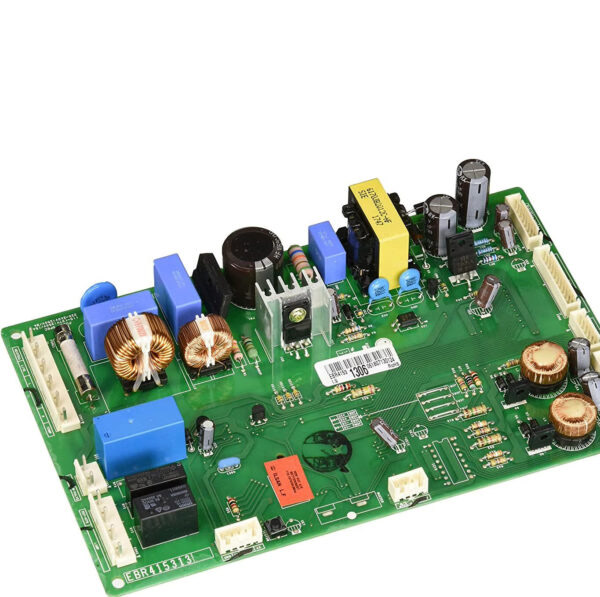
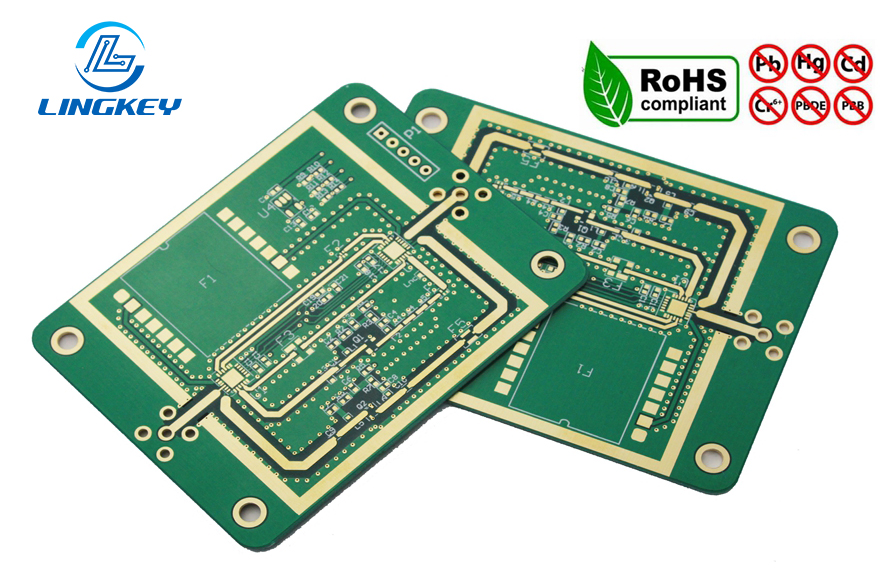
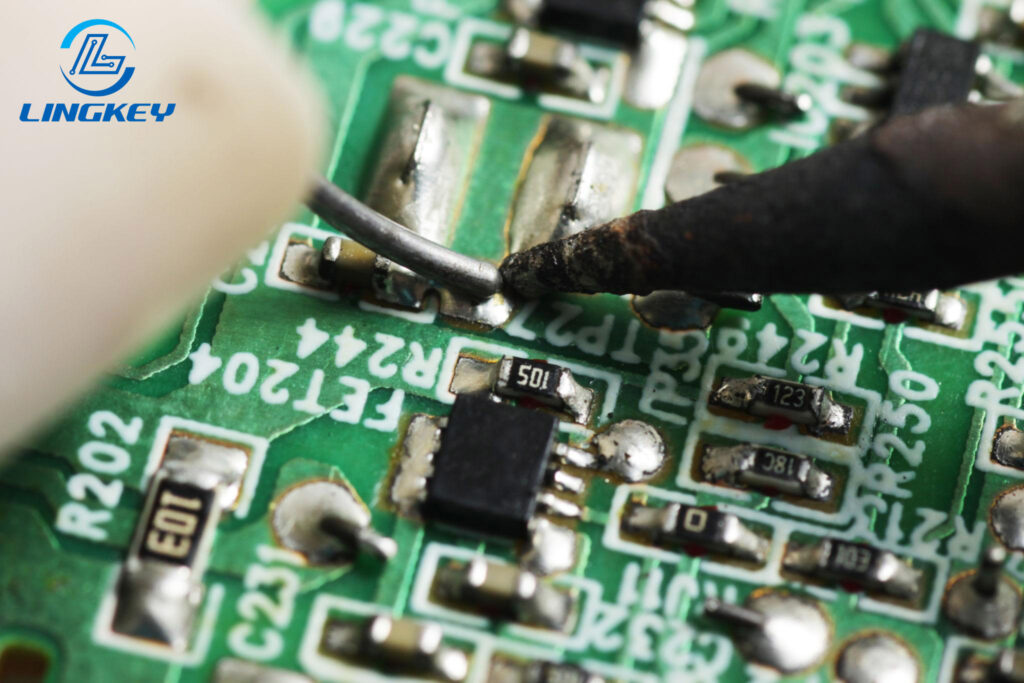
Lead free PCB assembly means assembling the PCB in lead free environment or using lead free solder material. This change is attributed to the necessity to comply with environmental protection regulations and to remove the covert health risk brought by lead contained in the electronic products for consumer and industrial applications.
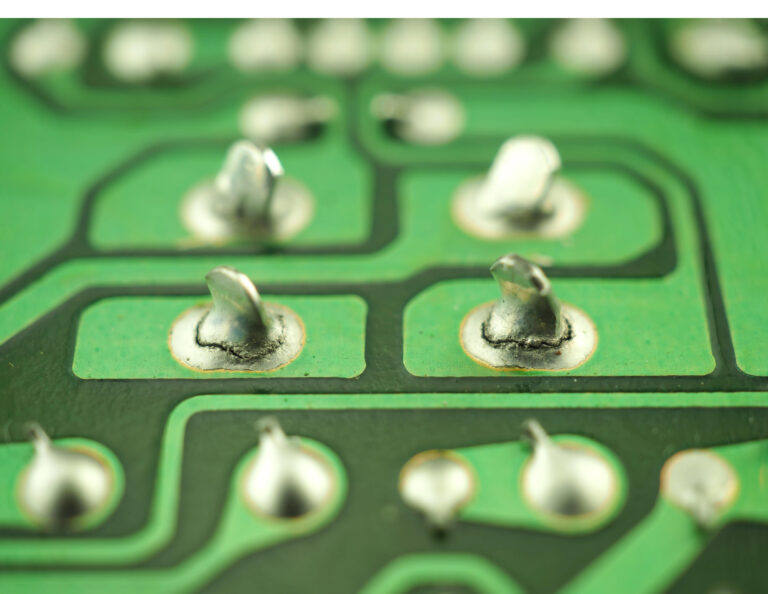
Unlike traditional tin-lead solder, lead-free PCB assembly uses common lead-free alloys such as SAC305 (Sn96.5Ag3.0Cu0.5) and lead-free HASL to form robust solder joints. This contributes to the demand for lead free products globally and allows the manufacturers to meet the environmental regulations, and compatibility with high density, high reliability layouts. The choice of materials is very important because the producers have to use ROHS compliant PCB substrates as well as a suitable type of PCB material that can withstand the higher temperatures and thermal stress of the lead free reflow procedure.
Understanding RoHS Regulations for PCB Assembly
What Is RoHS?
A great deal of care and attention has been directed at its equivalent energy requirement (EER) and Restriction of Hazardous Substances Directive (RoHS) compatibility. It aims to restrict the hazard substances — such as lead, mercury, cadmium, and some types of flame retardants — used in electrical and electronic products. RoHS knowledge is an essential requirement if you are working with electronics manufacturing and PCB assembly.
RoHS Requirements and Scope
| Restricted Substance | Maximum Limit (ppm) |
| Lead (Pb) | 1000 |
| Mercury (Hg) | 1000 |
| Cadmium (Cd) | 100 |
| Hexavalent Chromium (Cr6+) | 1000 |
| Polybrominated biphenyls (PBB) | 1000 |
| Polybrominated diphenyl ethers (PBDE) | 1000 |
| DEHP, BBP, DBP, DIBP | 1000 |
RoHS obliges the producers to test and certify their products, to ensure that each part complies with the RoHS requirements. Today, contending with RoHS, REACH is almost always seen with RoHS, as both European legislation require exhaustive material testing and documentation.
RoHS vs. WEEE
The use of hazardous substances is limited under RoHS and the recycling and disposal of waste in an environmentally safe way is required under WEEE (Waste Electrical and Electronic Equipment Directive). They are both pushing the industry toward a circular economy and less e-waste.
RoHS Compliance in PCBA Manufacturing
Achieving RoHS compliance in PCBA production is a process, and it’s more than just making the change to lead-free solder. Manufacturers need to concentrate on the following:
- Material Selection:Use only ROHS standard PCB materials, high-Tg/Td laminates and qualified component sets.
- Process Controls:Set stringent process parameters for the soldering process and monitor the lead content at each stage.
- Testing & Validation:Employ XRF analysis and the reference IEC 62321 to test for restricted substances.
- Documentation:Maintain records of batch numbers, test reports, Declarations of Conformity and supply chain declarations of materials.
- Baked Before Assembly:Moisture sensitive PCB materials and SMD components are baked before assembly to prevent defects in high temperature reflow.
Such strict controls are necessary to comply with RoHS and other world environmental standards.
Requirements for Lead-Free PCB Assembly
Technical and Material Requirements
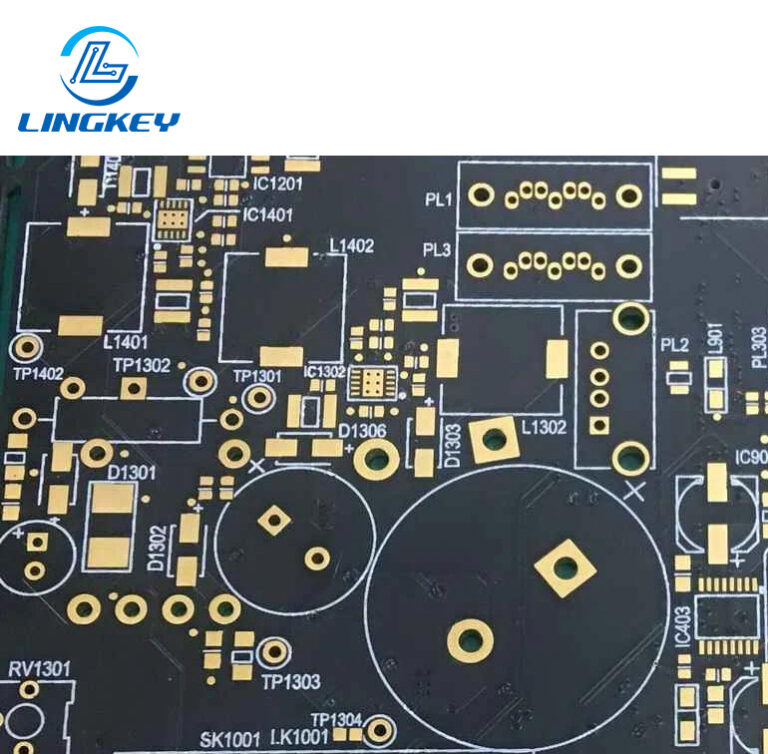
- PCB Materials:Choose Tg and Td (glass transition and decomposition temperature) of materials to be high enough to withstand the high temperature for the lead-free reflow.
- Lead-Free Compatible Surface Finishes:Finish with ENIG, ENEPIG, immersion silver, OSP and lead-free HAL for best solderability and compliance.
- Component Compliance:Purchase only lead-free products that are RoHS compliant and capable of withstanding process demands such as the higher heat cycles.
Surface Mount Technology (SMT) and Assembly Lines
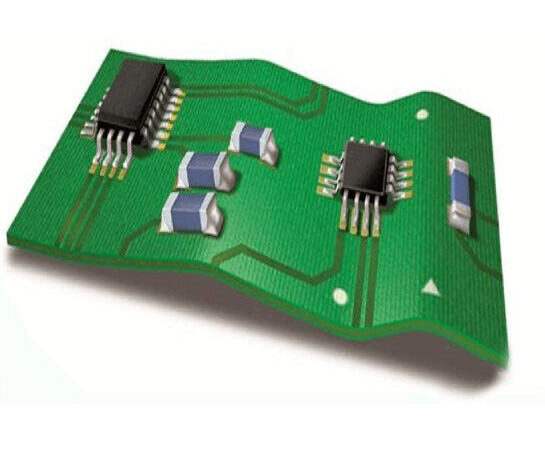
Today’s SMT lead-free PCBA is run on high speed pick and place machines and precision solder paste stenciled on boards that are pre-finished with finishes suitable for the lead-free process. The processes need to be optimized, and the production line must be robust to produce consistent quality.
Solder Paste and Alloys for Lead-Free PCB Assembly
Moving from tin-lead solder to modern lead-free solder involves a reconsideration of both chemistry and process:
Common Lead-Free Alloys Used
| Alloy | Composition | Melting Point (°C) | Notes on Use in Lead-Free |
| SAC305 | Sn96.5Ag3.0Cu0.5 | 217-220 | Industry standard |
| SAC405 | Sn95.5Ag4.0Cu0.5 | 217-219 | Enhanced toughness |
| SN100C | Sn99.3Cu0.7 + additives | 227-228 | Wave soldering, cost-effective |
Lead-free alloys behave differently when heated. The higher reflow profile— with peak temps at about 250°C— requires that all components and pcb materials withstand this thermal stress.
Manufacturing Process for Lead-Free RoHS-Compliant PCB Assembly
Essential Steps and Process Parameters
- PCB Fabrication:Use ROHS-compliant PCB substrates and laminates with high temperature cycle resistance.
- Component Placement and SMT:Lead-free adapted SMT lines guarantee a reliable SMD population and few handling
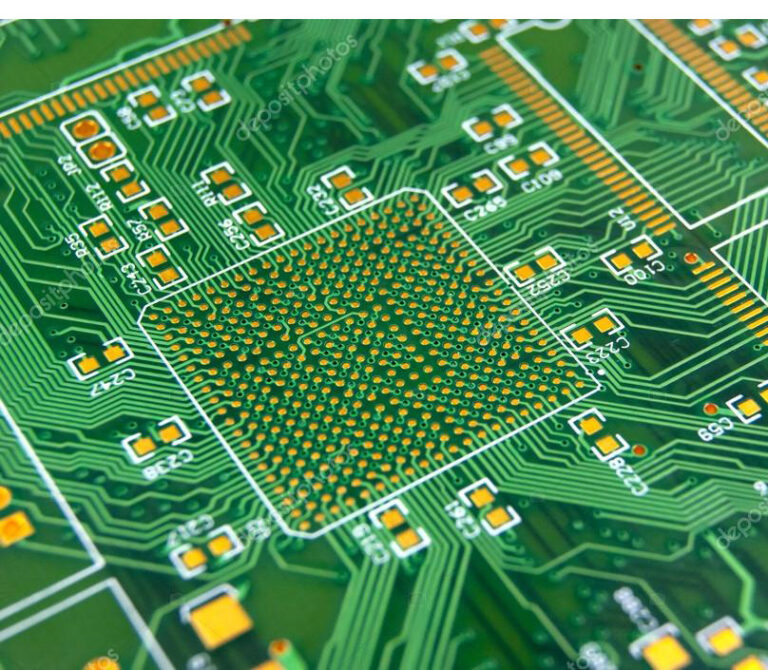
- Solder Paste Application:Automated solder paste printing delivers accurate dispensing, indispensable in case of fine-pitch and BGA packages.
- Reflow Soldering Process:The reflow profile of the oven must be closely monitored; incorrect profiles will cause damage to the part or poor wetting with lead free solder.
- Wave Soldering:Specialized lead-free baths, for example lead-free HASL and SN100C, need to be tightly controlled in terms of process parameters.
- Quality Control:AOI, X-ray and ICT testing at each stage to ensure that the lead free pcb assembly is functioning as designed and meets the
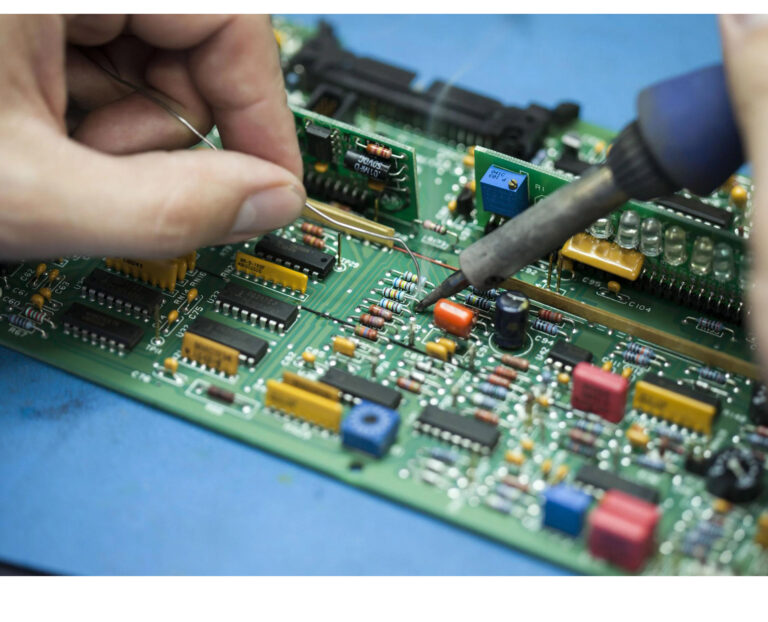
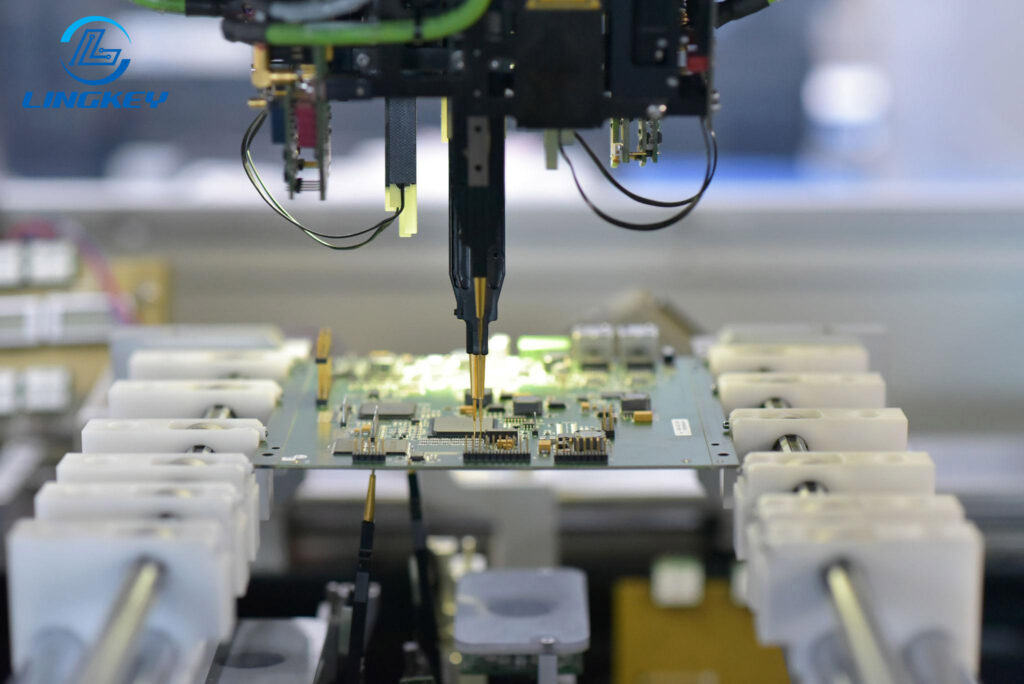
The lead-free pcb assembly at LingKey is processed in full RoHS-compliance production line with advanced SMT&THT technology. Accurate temperature-controlled reflow, automated solder paste printing, real-time process monitoring, make for consistent solder joint quality and stable production. With the assistance of AOI, X-ray inspection and functional testing, LingKey assures that every PCBA complies with stringent reliability and environmental requirements.
Reliability Considerations for Lead-Free Assembly
Major Reliability Issues
- Thermal Stress:Lead-free products experience elevated processing temperatures, raising the bar for both substrate and component integrity.
- Intermetallic Compound (IMC) Formation:The IMC grows faster in lead-free assemblies, impacting the solder joint integrity and board reliability over time. One of the major problems in the lead-free soldering process is the regulation of thickness and type of IMC layers which can turn to be brittle if not driven by suitable process parameters and good reflow profile settings.
- Drop and Vibration Resistance:Lead-free alloys are strong, yet they can be more fragile than tin-lead Prior to acceptance, boards which will be exposed to harsh shock, such as for industrial controls or automotive electronics, must be tested to verify that the assembly complies with both enviromental and reliability standards.
- Moisture Sensitivity:Many PCB substrates, employed in lead-free assembly, have to be baked prior asembly to prevent that high-temperature reflow will cause them to delaminate or “popcorn”.
- Tin Whiskers:Some of the current lead-free solders are susceptible to the growth of tin whiskers, which are tiny metallic filaments that can cause shorts and failures. The choice of design, surface finishes and continuous monitoring of quality are effective in controlling this risk.
Surface Finishes for Lead-Free PCBs
Choosing an appropriate surface finish is critical for lead-free HASL and other compatible finishes to provide high initial and long-term solderability. The following summarizes the most important options from the table:
| Surface Finish | Lead-Free Compatible | Characteristics | Common Applications |
| ENIG | Yes | Excellent planarity & oxidation resistance, stable for fine-pitch and HDI | SMT, BGA, HDI |
| ENEPIG | Yes | Outstanding wire bonding and anti-IMC growth | Medical, Aerospace |
| Immersion Silver | Yes | High conductivity, economic, sensitive to atmosphere | RF, Analog, IoT |
| OSP | Yes | Cost-effective, temporary protection, eco-friendly | Consumer, LEDs |
| Lead-Free HASL | Yes | Well-known legacy option, robust, supports higher temp soldering process | Industrial, Power |
Notes:
- ENIG and ENEPIG are the norm for the most aggressive environments and high density board designs since they are the most oxidation resistant and best mate to high density designs.
- OSP is an economical and environmentally friendly finish, but it should be built as soon as possible after finishing for the best results.
- Lead-free HASL provides a seamless transition for assembly lines accustomed to the conventional HASL process, only that there is no lead content.
Quality Standards & Best Practices for Lead-Free PCB Assembly
Compliance with applicable ROHS standards and quality requirements is not just a matter of adhering regulatory requirements, but also involves conforming to industry standards which specify process quality and reproducibility.
Key Standards:
- IPC J-STD-001and IPC-A-610: Describe the process requirements, inspection criteria and documentation requirements for smt lead-free pcb assembly.
- ISO 9001 & ISO 14001:Essential certifications for professional electronics manufacturing facilities.
- IEC 62321:Good for testing hazardous materials, to ensure your materials make lead-free products that comply with worldwide ROHS directives.
Best Practices:
- Employ a strong documentation system for traceability and prove full ROHS and REACH compliance.
- Apply strict process control in every step including solder paste screen printing to final inspection.
- Conduct regular XRF or wet chemical tests on raw materials and the end product to avoid any non-compliance.
Work together with stakeholders, including design, buying, quality and manufacturing, to select suitable pcb materials, finishes, and reflow profiles.
Benefits of Lead-Free and RoHS-Compliant PCB Assembly
The reasons for lead-free PCB assembly are compelling from multiple perspectives:
- Meet Environmental Protection Standards:The production is in line with global targets for e-waste reduction by removing toxic materials.
- Protect Worker and User Health:Reducing the lead content in consumer and industrial electronics decreases the risk at every stage of a product’s life.
- Global Market Access:Lead-free products that comply with the RoHS and other environmental standards are the only ones that can be sold in the big markets such as the EU, China, and North America.
- Stronger Brand:Consumers are more and more demanding of products that adhere to good environmental practices, associating compliance with quality and responsibility.
- Improved Reliability:Due to improvements in materials and lead-free alloys, the reliability of lead-free PCB assembly now equals or exceeds that of earlier versions of tin-lead solder technology.
Key Features to Look for in a RoHS-Compliant Lead-Free PCBA Manufacturer
Finding a true partner in lead-free PCB assembly is choosing a supplier that has the necessary infrastructure, knowledge, and certifications:
- Fully RoHS-Compliant Assembly Lines:The processes, from bare board fabrication to final test, are all tailored to lead-free and compliant practices.
- Advanced Process Engineering:Capability to generate and optimize reflow profiles and other process parameters for each design.
- Testing Capabilities:Capability for AOI, X-ray and ICT testing, and in-house labs for substance analysis.
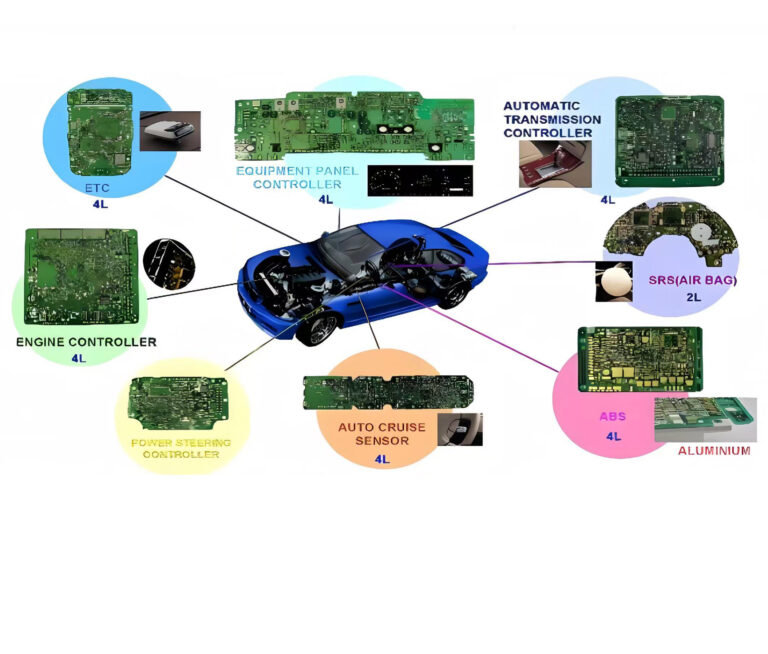
- Proven Track Record in Lead-Free Products:Proven projects in consumer electronics, medical, automotive and other industries depending on lead-free and ROHS compliant boards.
Frequently Asked Questions about Lead-Free PCB Assembly
What are the common lead-free alloys used in modern electronics manufacturing?
- Among them, the most popular ones are SAC305, SAC405 and SN100C. These are delivering steady solder joints under high temperature and conform to ROHS.
How can I make sure my product meets ROHS and REACH?
- Work with suppliers that document and audit their supply chain, test every material on receipt, and that can supply you with compliance certificates and xRF test reports.
Why is higher temperature necessary in a lead-free soldering process?
- Lead-free alloys have a higher melting temperature than tin-lead solder. This entails that the reflow profile assembly lines and hardened ends should be adapted to a higher thermal stress level to avoid the damage of PCB materials or parts.
Is lead-free HASL a reliable finish for harsh environments?
- Yes, the process is if the temperature is well controlled and capable of the pcb materiel withstanding the higher reflow and wave solder temperature.
Future Trends in Lead-Free PCB Assembly and RoHS Compliance
The promise of lead-free PCB assembly is based on the continuous enhancement of today’s lead-free solder chemistries, intelligent factory-floor automation, and a digital approach to process parameter tracking to achieve real-time compliance. Other global environmental regulations like China RoHS, evolving REACH regulations will add to the demand for tighter control of materials and comprehensive documentation through the electronics manufacturing lifecycle.
We anticipate breakthroughs in PCB materials, with better moisture and temperature resistance, together with new surface finishes that provide enhanced performance and comply with evolving ROHS regulations.
Conclusion
To the end, the lead-free pcb assembly has become the standard responsible and future-oriented electronics manufacturing. Whether you are designing for Longevity, compliance, or environmental soundness, knowing the end-to-end scope—starting with materials selection and process development through assembly line operations and ongoing reliability evaluation—is critical. By meeting ROHS and other global regulations you are adding value to your customers and safeguarding your business from compliance risk.
Lead-free PCB assembly is feasible due to advances in materials, chemistry, and process control. As this guide to lead-free PCB assembly has shown, when all participants—from engineering to purchasing to manufacturing—adhere to these tenets, it results in a sustainable, robust solution for high-end electronic products.
In order to bring lead-free PCB assembly into production successfully, it’s important to work with an experienced manufacturing partner. LingKey provides professional RoHs compliant PCB assembly service under advanced SMT lines with strict quality control and full process traceability, assisting customers in obtaining high reliability, environmental compliance and cost effective production in broad electronics application.