Capacitor Polarity: Polarity, Positive and Negative Guide
Introduction to Capacitor Polarity
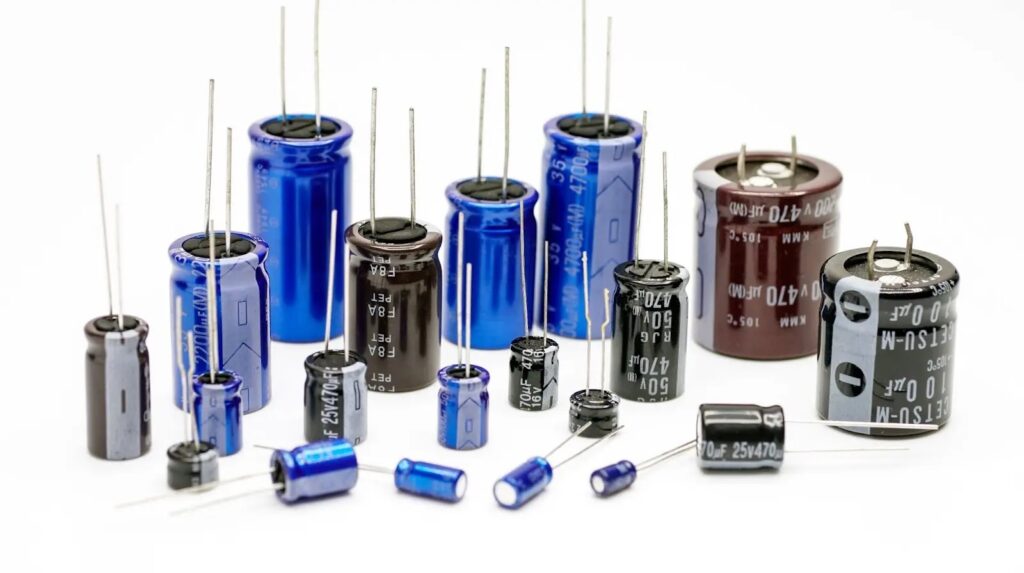
Capacitors are common components in electronics, which have significant roles within a circuit, including providing energy storage, filtering, and noise reduction. But there is one simple thing that dictates how good a capacitor is – the polarity of a capacitor.Capacitor polarity is the correct electric alignment of a capacitor when it is mounted on a printed circuit board. What is capacitor polarity and what are the effects of reverse polarity is essential for circuit performance, cycle life, and the most importantly, operator safety.Reversing the polarity may destroy a capacitor, reduce the performance or in extreme cases it may even explode.
Do Capacitors Have Polarity?
Depending on the capacitor type, capacitors may or may not exhibit polarity:
- Polarized capacitorshave a positive terminal and a negative terminal and must be connected in the correct orientation. Common types include electrolytic or tantalum capacitors.
- Non-polar capacitors such as ceramic and film capacitors, do not have polarity, so their terminals can be connected in either direction within a circuit.
Why is Polarity Important?
The dielectric and the electrode configuration in a capacitor are such that applying reversed polarity voltage to a polarized capacitor (backward connection) places a voltage across the capacitor it isn’t designed to withstand, resulting in either an immediate failure, or at least, a reduction in longevity.
Identifying Polarity
Polarity is usually indicated by physical polarity markings on the capacitors, identifying which side is the positive and which the negative terminal of the capacitor (in many cases with stripes or symbols on the body of the capacitor).
Types of Capacitors and Capacitor Polarity
Identifying whether a capacitor is polarized or non-polarized is your first step to proper installation and circuit safety.
Polarized Capacitors: Electrolytic, Tantalum, and Supercapacitors
Polarized capacitors have polarity markings, making it easy to indicate the positive side and determine the negative terminals of the capacitor.

Electrolytic Capacitors
- Dielectric:Thin oxide layer (very high capacitance).
- Polarity markings:Stripe pointing to the negative side, longer lead is positive.
- Applications:Power supply filters, signal coupling, audio, timing circuits.
- Why correct orientation? Connecting a polarized capacitor the wrong way (reversing the polarity) can cause rapid heating, damage to the capacitor, or even explode.
Tantalum Capacitors
- Dielectric:Tantalum oxide.
- Polarity info:Bar or “+” symbol indicates the positive terminal of the capacitor.
- Key features:Compact, stable, durable – used in mobile, aerospace.
- Warnings: Highly intolerant to incorrect polarity, can combust with reverse connection.
Supercapacitors
- Dielectric:Electrochemical (very large energy storage).
- Polarity:Clearly marked + and –; reversing the polarity is catastrophic.
Common Polarity Table
Type | Polarity Markings | Indicates the Positive Terminal | Application | Risk of Incorrect Polarity |
Electrolytic | Stripe, longer lead | “+” side | Power, signal, timing | May even explode |
Tantalum | Bar/“+” sign | “+” bar | Medical, mobile, timing | Smoke, internal fire |
Supercapacitor | +/– on can | “+” terminal | Energy backup | Instant failure |
Non-Polar Capacitors: Ceramic, Film, and Mica Capacitors
Non-polar capacitors (sometimes called non-polarized capacitors) have no positive or negative side. Their construction allows for bidirectional use.
- Ceramic Capacitors:Common in RF, bypass, and osc circuits (ceramic or film capacitors are often used here).
- Film Capacitors:Renowned for reliability and used in applications where film capacitors offer excellent stability over time.
- Mica Capacitors: Used in precise timing and oscillator circuits due to low loss and high durability.
Non-polar Table
Type | Polarity | Application | Special Feature |
Ceramic | None | High-frequency, filtering | High heat/freq. |
Film | None | Coupling, power supplies | Long life, stable |
Mica | None | RF, oscillator, precision | Accurate, durable |
Comparing Polarized and Non-polar Capacitors
Feature | Polarized | Non-polarized |
Requires polarity info | Yes (must be correct) | No |
Polarity information | Marked | Not relevant |
Common types | Electrolytic, Tantalum | Ceramic, Film, Mica |
Used in | DC filters, energy store | AC coupling, RF, filtering |
Risk if reversed | Damage, explosion | None |
Value range | uF to F | pF to μF |
Key Concepts in Capacitor Use
A few technical concepts underpin capacitor polarity and circuit performance:
- Dielectric:The insulating layer within a capacitor affects its stability, polarity, and applications. Electrolytic/tantalum dielectrics mean these capacitors must be connected with proper polarity.
- Polarity and Voltage:Every capacitor has a voltage rating. Pay attention to both voltage across the capacitor and correct polarity to avoid damage.
- Polarity Marking Placement:On older or hand-assembled circuit boards, careful attention must be paid, since polarity markings on capacitors may fade or be hidden after soldering.
- Positive and Negative Lead:On radial electrolytics, the positive lead is longer; on SMDs, a bar or dot indicates polarity.
- How to Determine the Capacitor Polarity:Utilize markings, packaging, a schematic, or set the multimeter for resistance or capacitance checks.
Importance of Capacitor Polarity
Capacitor polarity is crucial to the safety, efficiency, and longevity of an electronic circuit. It dictates the way the capacitor accrues and discharges energy, assists in stabilizing voltage and avoiding unintentional current spikes.
- Improper polarity can cause:Heat, breakdown, dangerous chemical leakage, or make a capacitor or even the circuit explode.
- Correct orientation guarantees: Protection against noise, stable voltage rails, proper circuit board operation, and prevention of expensive repair or replacement.
Effects and Risks of Incorrect Capacitor Polarity
Reversing the polarity of a capacitor triggers a cascade of problems:
- Breaks Down Dielectric:The wrong voltage polarity can cause the insulating dielectric within the capacitor to fail.
- May Cause Explosion:The capacitor can explode, emitting hot gases and a caustic liquid.
- Circuit Malfunction: Reversed polarity causes the circuit to execute sporadically, drawing the power supply, creating timing errors, and distortion—particularly in an audio or signal filter type of application.
- Damage to the Capacitor and Surrounding Components: When a polarized capacitor is installed in reverse, heat and pressure cause the capacitor body and even other components on the circuit board to be blown apart. This usually means board rework or replacement.
How to Identify Capacitor Polarity
Capacitor correct identification and fitting are important. Here are some tips for never getting the positive or negative side wrong again.Verify polarity is built into every SMT and THT flow at LingKey. Our engineers verify that BOM polarity information, PCB silkscreen markings and P&P orientation all match up so we don’t have reversed electrolytic or tantalum caps going through production.
Polarity Markings and Pin Length
- Polarity Markings on Capacitors:Look for a stripe, arrow, or bar on the body of the capacitor. For radial electrolytics, the negative side is normally marked with a stripe, the positive leg is longer. For tantalums, the bar or the “+” sign represents the positive lead.
- On SMD types, a dot, stripe, or color mark indicates polarity—check the datasheet of the for that particular series, as conventions may differ between manufacturers.
Capacitor Type | Marking Indicates | Positive/Negative Side |
Electrolytic (Radial) | Stripe | Points to negative lead |
Tantalum (Radial/SMD) | Bar or “+” sign | Indicates the positive terminal |
SMD (most types) | Stripe or colored | Often negative, but check datasheet |
Film/Ceramic/Mica | No marking | No polarity; connect either way |
Use a Multimeter to Determine the Polarity
Occasionally, the polarity marks are not present, illegible or burnt away, for instance when the board has been repaired or in prototypes. In such case, you can switch your multimeter to its continuity or capacitance mode to assist in identifying the capacitor’s polarity :
- Discharge the Capacitorbefore testing.
- Set the Multimeterto resistance measurement.
- Connect the Probes:
- For polarized capacitors, the resistance will climb when the red probe is on the positive lead.
- If reversed, you might record an immediate low or even negative value (indicative of incorrect measurement setup or a damaged dielectric).
- Capacitance Measurement: This also helps to check if the component is good, but does not always gives the correct polarity indication on all types.
Identifying on Circuit Boards and SMDs
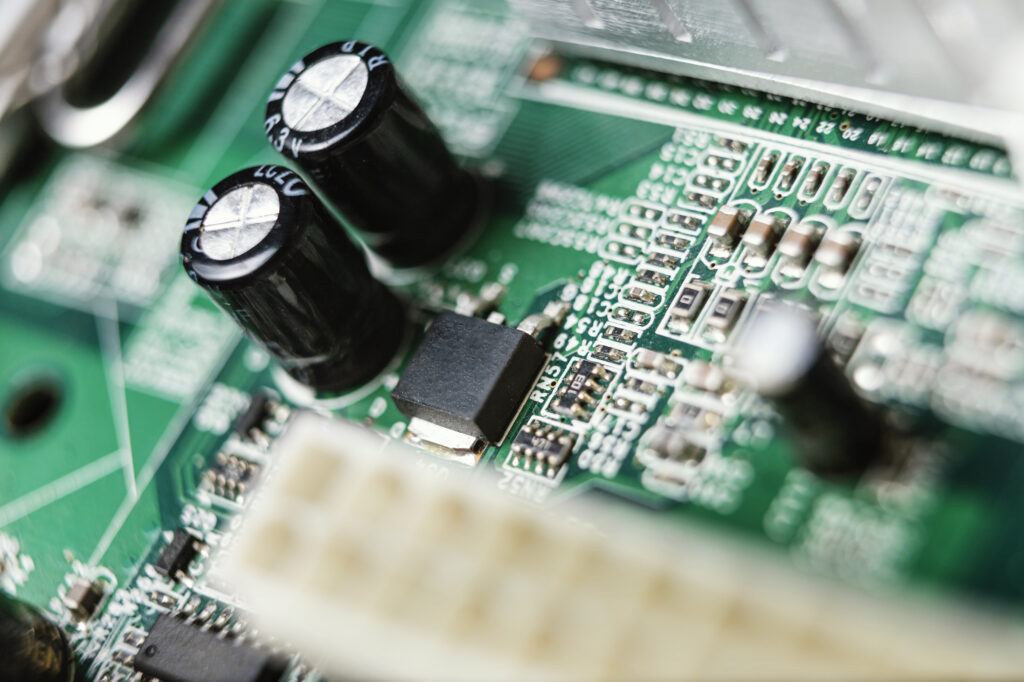
On a properly designed PCB, the silkscreen will usually mark the polarity.Look for :
- A plus (“+”) or longer pad (for the positive terminal),
- a shaded area or minus (“–“) sign (for the negative side),
- or even a square pad vs. round pad convention (with the square normally being the positive side).
Common Applications of Polarized and Non-polar Capacitors
Applications for Polarized Capacitors
- Power Supply Decoupling & Filtering:Used to smooth voltage rails in power supplies.
- Energy Storage:Storing charge for flash circuits and short-term power backup.
- Audio Applications:Coupling and decoupling stages in amplifiers.
- Timing Circuits:Determining the charging/discharging intervals in oscillators and timers.
Applications for Non-polar Capacitors
- Signal Filtering:Removing noise from AC signals; especially in analog and RF circuits.
- AC Signal Coupling:Blocking DC components while passing AC signals in amplifiers, radios, and communications equipment.
- Motor Start/Run Systems:Non-polar capacitors are used for phase shifting in single-phase AC motors.
Application | Polarized or Non-polarized | Common Types Used |
Power Supply Filtering | Polarized | Electrolytic |
Audio Coupling/Decoupling | Both | Electrolytic, Film |
Signal Processing (Analog/RF) | Non-polarized | Ceramic, Mica, Film |
Oscillator & Timing | Both | Tantalum, Ceramic, Film |
Motor Circuits (AC) | Non-polarized | Film Capacitors |
LingKey conducts polarity checks, visual inspection and electrical testing in the process of assembling. These preventive measures greatly minimize rework and ensure long term reliability for customer products, particularly when employing a polarized type electrolytic or tantalum capacitor.
Best Practices for Ensuring Correct Capacitor Polarity
- Always Confirm Polarity Before Soldering:Check capacitor polarity markings carefully and verify against the circuit board silkscreen.
- Reference the Schematic:The diagram will tell you which side is the positive or negative.
- Use a Multimeter Whenever in Doubt:If the polarity is not known because the markings are worn off, you can use a multimeter to find out the polarity of capacitor with certainty.
- Train Assembly Personnel:On the production line, employees should know that a wrong polarity can damage the capacitor and potentially cause reworking or loss.
- Document Polarity in Your BOM and Gerber Files:Please add obvious call-outs for the polarized components in your BOM and silkscreen layers.
- Review for Updates: Marking conventions can change depending on the capacitor type and manufacturer — always refer to the most recent datasheets.
Advanced Insights: Polarity in Modern, High-Frequency Circuits
- Dielectric Evolution:As circuit speeds increase, manufacturers optimize dielectric materials to withstand higher frequencies and voltages—even within polarized technology.
- SMD & Miniaturization:Board footprint constraints mean capacitor polarity—if ignored—can destroy entire sections of compact, densely packed PCBs.
- Voltage Polarity in Multilayer Designs:High-density boards may have mixed voltage rails; running a trace with incorrect polarity under a polarized capacitor is a leading cause of multi-board failures.
- Ceramic and Film Capacitors:In high-frequency switching supply designs, ceramic and film capacitors are often used in parallel with electrolytics. This combination improves ESR and voltage stability—without polarity risk.
FAQs: Your Capacitor Polarity Questions Answered
What does the stripe or bar on my capacitor indicate?
How do I determine if a side is positive or negative?
Is capacitor polarity important for ceramic and film capacitors?
What happens if I wire a polarized capacitor backward?
Conclusion
Knowing and obeying the polarity of capacitors is essential to any working electronic device. When working with electrolytic, tantalum or non-polar types such as ceramic or film capacitors,always check for polarity markings.