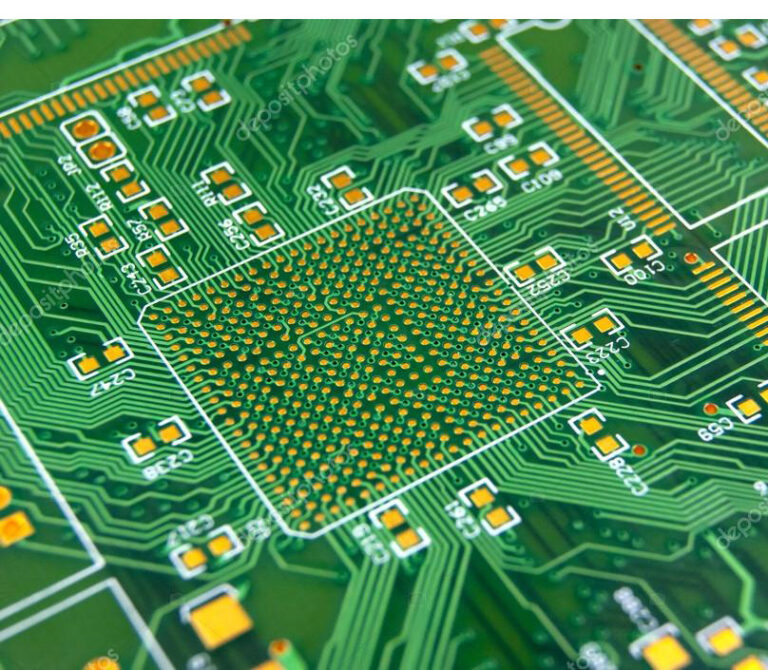
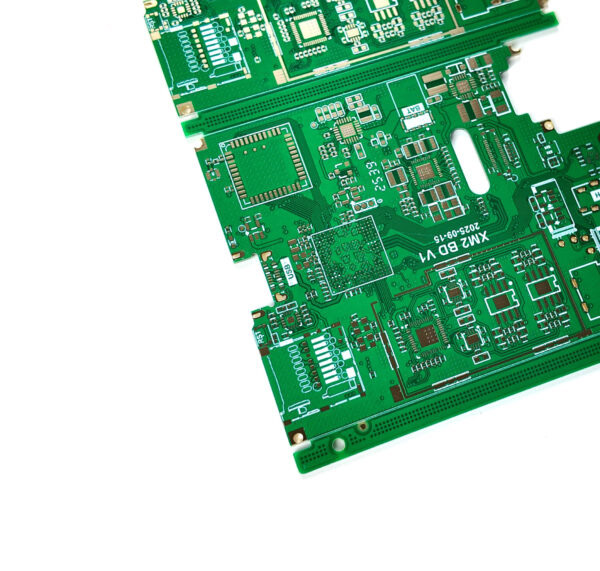
Complete Guide to PCBA Testing, Fixtures & Quality Standards
PCBA Test Fixtures are indispensable Tools in today’s PCB manufacturing process, that strive to test and qualify every printed circuit board assembly (PCBA) to high standard of quality before get into the market. In this article you will learned all about critical issues: structure, types, advanced test methods, maintenance, and integration with other testing equipment. Due to the emergence of miniaturized designs, high-speed production line and complexities, selection and application of good test fixtures in the production has become more important than ever to maintain and assure product quality and production efficiency.
Introduction
The processes of printed circuit board assembly (PCBA) are the same as those of other assembly processes and are subject to strict monitoring and inspection to achieve high reliability, especially when products are entering critical industry fields such as automotive, aerospace, and healthcare. And among those, the PCBA test fixtures focus on being a special efficient, high volume, repeatable testing tool. They support different types of tests – from flying probe testing to bed-of-nails solutions – each one adapted for various stages and requirements of the PCB production process. With increasing complexity of devices, the demand for custom fixtures with unique layouts, components such as ball grid arrays, and multiple test points is required for modern electronics.
What is a PCBA Test Fixture?
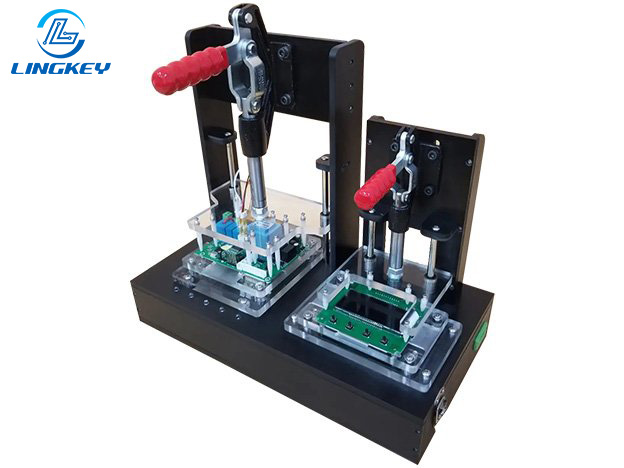
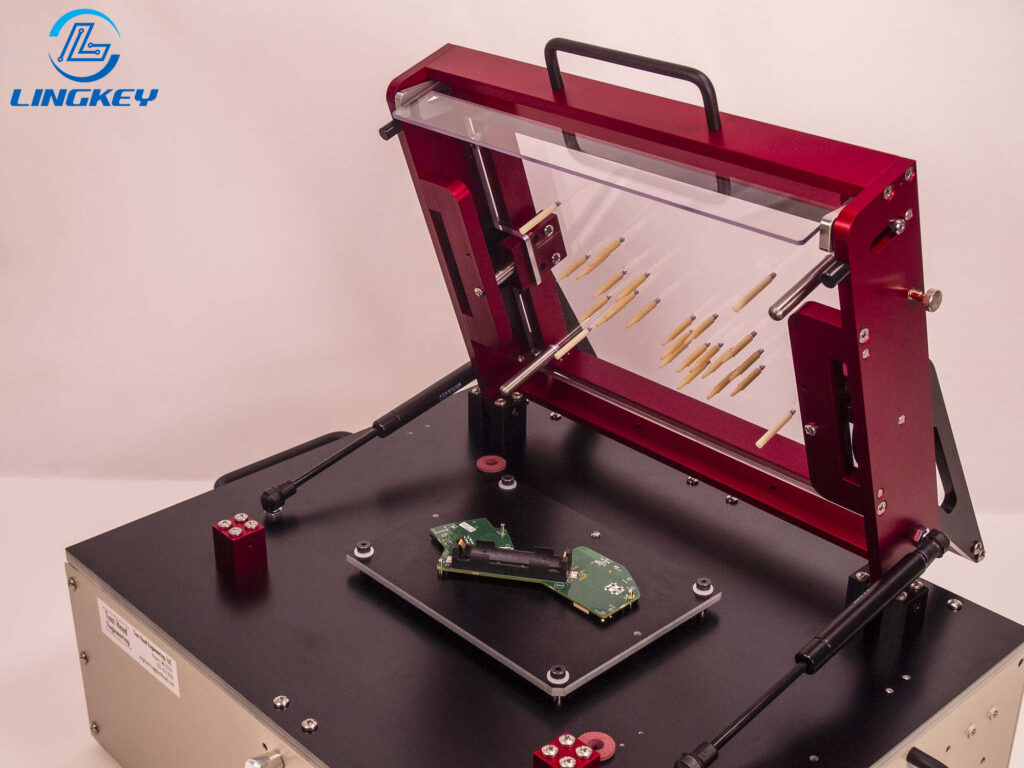
The PCBA test fixture is a mechanical and electrical device designed for holding the device under test (DUT)—the assembled PCB in place while allowing easy access for test probes. The purpose of the fixture is to provide some access to the signals, nets, and nodes on the board, via test probes (e.g. pogo pins), and high end tester equipment. Fixture are especially critical to accessing and testing every resistor, capacitor and component on a complex board, particularly when you rely on automated machinery. They enable you to execute test software routines that will detect short circuits, open circuits and other anomalies.
Functions and Benefits:
- Allow rapid connection to multiple test pointson the PCB.
- Support full board test sequences, such as electrical performance test and solder joint inspection.
- Integrate seamlessly with other PCBA equipment such as high speed testers, AOI cameras and software for results logging and analysis.
- Make reworkand troubleshooting easier by pinpointing faulty solder joints or assembly errors.
- Ensure stable contact with even small or densely packed test sites like ball grid arrays.
Components and Structure of PCBA Test Fixtures
The design and components of a PCBA test fixture dictate the types of boards and tests it can work with:
Base and Frame
Solid design ensures stability and precision in the long run, even on high volume lines. Aluminum and similar materials are commonly used in the production of durable and precise products.
Contact Interface & Test Probes
The interface is made up of arrays of pogo pins (also known as test probes) that form a repeatable, reliable connection with multiple test pads on the PCB. Gold-plated probes guarantee low resistance for high-quality signal transmission.
Actuation System
The actuation system (manual, pneumatic or motor driven) pushes the DUT onto the probes, allowing even high PCB with large number of parts or large area to have stable contact.
Electrical Wiring & Signal Handling
Shielded cables preserve signal integrity and guard sensitive nodes from noise while running board test.
Control Electronics
Contemporary fixtures feature circuit boards and microcontrollers that automate the testing sequence, communicate with test software, and sense test conditions.
Safety Features
Electrostatic Discharge (ESD) protection is necessary for modern fixtures to protect sensitive boards from static damage during the entire testing process.
Common Types of PCBA Test Fixtures
Different boards and testing processes demand different fixture types:
- Bed-of-Nails Test Fixtures:Suited for high-speed, high-volume board test routine with simultaneous access to hundreds or thousands of test points. Most applicable for stable, well-established product lines.
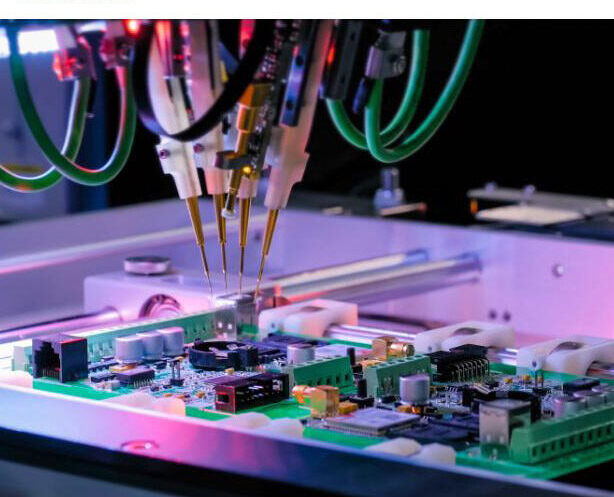
- Flying Probe Test Fixtures:Ideal for prototypes, quick-turn jobs, and when the design data changes often. Non-contact probes can access hard-to-reach areas, but it is a slower process than the bed-of-nails.
- Functional Test Fixtures:For verifying real-world operation through test methods that simulate actual device usage.
- In-Circuit Test (ICT) Fixtures:Intended for direct electrical testing; great for isolating shorts, opens, and resistor/capacitor failures.
- Burn-in Fixtures:Applied for burn-in test as well as for stress test to detect infant mortality under constant load and temperature.
- Programming Fixtures:For in-line or offline loading of the firmware, particularly in assemblies with many microcontrollers.
- Manual Fixtures:Basic, affordable solutions for rework, validation of prototypes, or production problem resolution.
Comparison of Board Test Fixture Types
| Fixture | Suitable For | Speed | Cost of Testing | Flexibility |
| Bed-of-Nails | High-volume, mature products | Very high | Medium | Low |
| Flying Probe | Prototypes, frequent changes | Lower | Higher | High |
| Functional | Final quality check | Varies | Medium | Medium |
| Burn-In | Stress, reliability testing | Low | Higher | Low |
| Programming | Volume firmware loading | High | Low | Medium |
| Manual | Rework, troubleshooting | Low | Low | High |
Test Methods & Testing Processes
Making every assembly passing the required quality test is a combination of the following test methodologies:
- In-Circuit Testing (ICT):Check power connections and component values (e.g. make sure a resistor is there and the values match the design data).
- Functional Testing (FCT):Powers up the DUT and runs through typical usage scenarios.
- Flying Probe Testing:Employs portable test probes to reach test points without having to set up a dedicated fixture, great for quick design iterations.
- Automated Optical Inspection (AOI):Uses cameras and AI to detect soldering defects, short circuits, misplaced components and poor assembly.
- X-ray Inspection:Used to inspect concealed soldered joints, for example, under ball grid arrays, complementing fixture-based testing.
- Burn-in Testing:Stresses the boards (heat, voltage, run time) to find early fails and increase confidence in final quality.
Applying these test methods in combination results in better coverage and avoids that such defects as poor soldering or incorrect capacitor values go undetected.
Advantages & Disadvantages of PCBA Test Fixtures
Advantages
- Efficiency and Consistency:Rapid, automated testing improves throughput and ensures repeatable, objective results.
- High Test Coverage:Simultaneous testing of many nets and nodes (hundreds or thousands).
- Customization:Addresses the need for custom fixtures to accommodate unique layouts or highly sensitive parts.
- Supports High-Volume Board Test:Fixtures like bed-of-nails are designed for high efficiency in a high-volume production environment.
Disadvantages
- Initial Cost of Testing:High initial investment for custom design and fabrication.
- Inflexibility:Once set, not ideal for boards with rapid, successive design changes.
- Complex Maintenance:Probes can wear or misalign, requiring routine attention to ensure stable contact and maintain accuracy.
Integration with Testing Systems
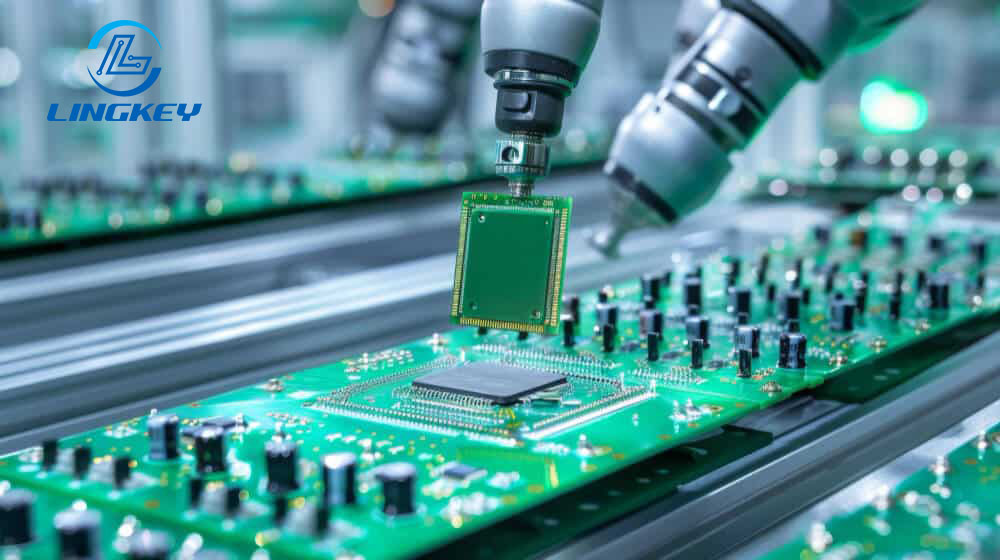
A key advantage of advanced fixtures is smooth integration with:
- Automated Test Equipment (ATE):For high-speed, repeatable tests.
- Test Software:Automates sequencing, logging, and defect analytics.
- Automated Optical Inspection:Combined with electrical tests for comprehensive coverage.
- MES/ERP Systems:Test results feed directly into production and quality metrics, enabling real-time feedback and process improvement.
This integration helps the testing process keep pace with the assembly process, closing the loop between test data and manufacturing optimization. Real-time connectivity allows for immediate notification of issues such as soldering defects, open circuits, or short circuits, reducing rework downstream and enhancing final quality through timely application of corrective actions.
Design Considerations for PCBA Test Fixtures
Building an effective test fixture calls for understanding the product as well as the production environment.Design expertise considerations:
- Board Layout & Design Data:The alignment of test probes can be precision aligned to every node, pad, and component required by using accurate CAD and Gerber files, even in fine-pitch zones such as ball grid arrays.
- Component Accessibility:Make sure test probes can access critical points (every resistor, capacitor, and solder joint) without disassembly.
- Multiple Test Points:For complex PCBs, space probes to maximize test coverage with a minimum number of probes while checking every circuit.
- Stable Contact:Design mechanical mating and alignment features for robust repeatable connections in high volume. Stable and consistent fixture setup is necessary to prevent the test procedure from generating spurious failures.
- ESD Protection:Integrate ESD-safe materials and grounding within the fixture to shield sensitive parts during test.
- Test Probe Selection:Tailor probe geometry, plating, and tip style to match the application (e.g., fine probes for ball grid arrays, high-force probes for surface mount).
- Fixture Maintenance Access:To facilitate cleaning and replacement of wear parts and reduce downtime and the long-term cost of testing.
- Testing Software Compatibility:The fixtures shall be compatible with major test software platforms for easy integration with automated test systems and report generation.
PCBA Test Fixture Manufacturing Process
The high quality PCBA test fixture production process goes through the following steps to ensure precision and solidity:
- Receipt and Validation of Design Data:Review all PCB documentation, including netlists and BOM.
- CAD Design:Model the fixture to fit each node, test pad, and mechanical constraint.
- Material Selection:Select sturdy, ESD protected frame and plate materials based on expected test cycles.
- Component Sourcing:Procure high-reliability test probes, connectors, and actuators.
- Machining and Assembly:Use CNC and precision assembly for pin blocks, frames, and actuation systems.
- Electrical Wiring:Route and shield signal lines to eliminate noise and maintain test integrity.
- Control Electronics Integration:Add controllers, relays, and communication interfaces as required.
- Quality Control and Validation:Perform pre-shipment verification under test software to verify the electrical and mechanical operation.
- Customer Acceptance Testing:Collaborate with the client to validate fixture fit and function in their environment.
Latest Innovations and Trends in PCB Board Test
The PCB production is adopting a number of new technologies to improve efficiency, flexibility and coverage in the testing process:
Modular and Reconfigurable Fixtures
These enable the manufacturer to adapt a single fixture for future board revisions or multiple board types by changing probe blocks or plates. This can reduce the custom fixture requirements for each new product resulting in cost savings and faster time to market.
IoT-Enabled and Smart Fixtures
Fixtures with sensors can record usage, detect probe wear, and track environmental conditions. Predictive maintenance capabilities further boost uptime and reduce rework.
High-Density and Micro Probing
Progress in micro-machining enable fixtures to confidently make contact with even the most dense PCBs, accessing multiple test points without the risk of damage to the board or probes—this is particularly valuable for routers, wearables, or medical devices.
Enhanced Integration with Automated Optical Inspection (AOI) and Flying Probe Testing
The mixed technology assembly process complicates the testing process, but the combination of fixture-based electrical tests with automated optical inspection and flying probe testing provides almost 100% coverage, rapidly detecting both visible and non-visible defects (such as weak solder joints below ball grid arrays).
Maintenance and Troubleshooting
Routine fixture care is a critical investment in testing efficiency and product reliability:
- Probe Maintenance:Inspect for wear on test probes and replace to ensure good electrical contact for both false fails and missing defects.
- Fixture Cleaning:Clean contact areas frequently to prevent contamination, which can reduce test coverage or produce unreliable results.
- Calibration:Regularly calibrate the fixture with reference boards and test software to ensure the accuracy is maintained.
- Actuation System Checks:Make sure parts like pneumatic systems or cams are moving smoothly and are making consistent contact force.
- Wiring & Electronics Inspection:Check all internal wiring and control electronics for wear, corrosion, or mechanical damage.
- ESD Protection Verification:Routinely test ESD safety features to avoid latent damage to sensitive components.
How to Choose the Right PCBA Test Fixture
Choosing the best fixture involves balancing upfront cost against long-term savings in board test time and coverage:
- Assess Production Volume:For high-volume runs, automated bed-of-nails or modular automatic fixtures offer the best return.
- Consider Board Complexity:Complex PCB with many test points, or special components (such as ball grid arrays) may require specialized, high-density probe arrays.
- Account for Test Methods Needed:Clearly define whether you require in-circuit testing, functional, burn-in, programming, or a mix of methods.
- Compatibility with Tester and Test Software:Make sure your device is capable of plug and play with existing PCBA equipment and integrate well with factory
- Budget and ROI:Contrast the price of putting the options through their paces — custom tooling may seem costly but brings substantial long-term savings in speed and in catching defects, and less rework.
- Supplier Experience and Support:Select vendors with experience in the PCB industry who provide dependable support, training, and enduring relationships.
FAQs: PCBA Test Fixtures
What are the most common types of board test fixtures?
Bed-of-nails, flying probe, functional, burn-in, programming, and manual fixtures—all with appropriate variations to meet different manufacturing requirements and testing methods.
How do you ensure stable contact during testing?
Utilize high-quality, precision aligned test probes and periodically service the actuation mechanism and probe integrity.
What’s the cost of testing with various fixture types?
Bed-of-nails and automation add to the initial cost, but dramatically lower the per unit cost in volume. Flying probe is more flexible but expensive for mass production.
How do fixtures handle complex components like ball grid arrays?
via microprobes or using auxiliary methods such as X-ray examination, so that also concealed solder joints are taken at test.
How does integrating AOI and fixture-based testing improve product quality?
AOI identifies visible defects at high speed and in-circuit test and functional test catch electrical faults, resulting in full coverage of defects and less rework.
Conclusion
In summary the PCBA test fixtures are the cornerstone in the assembly testing in electronic industry, between assembly and end quality. The selection of the appropriate type of fixture and the integration with machining software and inspection technologies over the manufacturing process, guarantees a stable, efficient, and scalable production. Continuous innovation and proper care reduce the cost of testing and make it possible to produce high quality PCBA products that surpass market expectations. Quality test fixtures and experienced manufacturers, such as LingKey, are your consistently proven route to safe, reliable product results, less rework, and world-class manufacturing success.