Resistor Color Code: Comprehensive Coding Guide & Calculator
Introduction to Resistors and Color Codes
A resistor is a basic electronic component that can be found in almost all electrical gadgets. It is simply supplying some resistance in a circuit, which is necessary to control current, divide voltage, protect sensitive components. The Electronics hobbyist/engineer is expected to be able to quickly identify the resistance value, type and characteristics of a resistor.
Resistors Types and uses Resistor color code calculation with 4 band, 5 band, 6 band resistor codes and more are included in this all in one guide.
Fundamental Concepts: Resistance and Resistivity
What is Resistance?
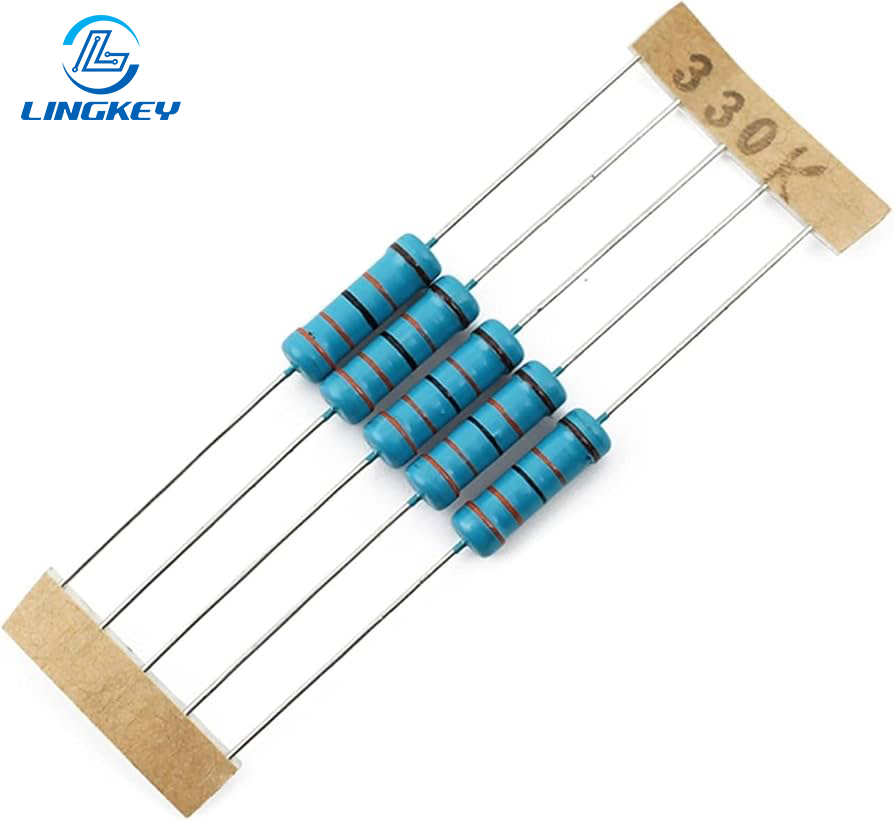
- Resistancemeasures how much an electronic component opposes the flow of electric current, quantified in Ohms (Ω).
- The nominal resistanceis the ideal, or rated, value for which a standard resistor is designed.
Factors That Determine the Resistance Value
- Material(carbon, metal film, or wirewound resistors)
- Lengthand thickness of the resistive element
- Temperatureand environmental effects
Ohm’s Law
- The core relationship: V = I × R(Voltage = Current × Resistance)
The Role of Resistors in Electronic Circuits
Resistors play many vital roles:
- Current Limiting:Protect LEDs with current-limiting resistors to prevent burnout.
- Voltage Division:Use voltage divider circuits to produce reference voltages.
- Signal Control:Shape and filter analog and digital signals.
- Surge Protection:Employ surge protection resistors to safeguard circuits against voltage spikes.
- Precision Control:Use high precision resistors for accurate measurement instruments.
Wirewound resistors are generally employed where high power dissipation is expected, and high reliability is needed, for example, in power supplies.
Categories of Resistors: A Detailed Overview
Classification Based on Behavior
- Linear Resistors:Constant resistance (R) is maintained regardless of voltage or current. Resistor types examples: metal film resistors, carbon film resistor.
- Nonlinear Resistors:The resistance can also depend on an external field like temperature (NTC and PTC thermistors), light (photoresistors, LDRs), or voltage (varistors).
Classification Based on Construction
- Fixed Resistors:The most common resistor type, with a single, unchangeable value.
- Variable Resistors:Adjustable value resistors like potentiometers, rheostats, and trimmer resistors.
Classification Based on Usage
- General-purpose Resistors:Used in most standard circuits for current regulation or voltage division.
- Special-purpose Resistors:Designs for high precision, high power, sensing, or surge protection.
Different Types of Resistors: Linear and Nonlinear
Linear Resistors
- Carbon Composition Resistors:Good for general use but have relatively wide tolerance levels.
- Carbon Film Resistors:More accurate, commonly found as common resistor choices in basic circuits.
- Metal Film Resistors:Favored for high precision due to lower ±1% or ±0.1% tolerance—the best for low-noise circuits.
- Wirewound Resistors:Best for high current and maximum power
- Surface Mount Resistors (SMD):Used in small scale automated PCB manufacturing SMD resistor is the fundamental component of surface mount electronics.
Nonlinear & Special-Purpose Types
- NTC and PTC Thermistors:Resistance varies with temperature (NTC decreases, PTC increases).
- Varistors:Used for surge protection due to voltage-dependent resistance.
- Photoresistor (LDR):Used where resistance must change in response to light.
- Magneto-resistor, Humidity-sensitive, Force-sensitive Resistor:Specialty sensors for specific applications.
Material Types and Form Factors
- Material Choices:Carbon, metal oxide, metal film, and wire (for wirewound resistors).
- Form Factors:Axial, radial, and surface mount (for SMD resistors).
Many modern devices use surface mount resistors because they are small and convenient for use with automated manufacturing.
How to Select the Right Resistor for Your Application
- Determine the Resistance Value
- Check Rated Value and Nominal Resistance
- Verify Tolerance Levels:±5% (gold fourth band), ±1% (brown fourth band), or tighter.
- Consider Maximum Power:Choose a resistor with a power rating at least double what is expected in your application.
- Select Type:Fixed or variable; linear or nonlinear, special-purpose if required.
- Choose Appropriate Form Factor:Axial for breadboarding, surface mount for compact PCBs.
- Environment:Factor in temperature coefficient and required stability.
Introduction to Resistor Color Codes
Resistor color codes enable you to determine the value and other ratings by reading the color bands on the body of the component.
- Why Use Color Codes?Enables the ability to quickly identify resistors, even in large, crowded PCBs where space is limited.
- Which Band Means What?
- The first two bands (or three for 5-band resistor) are significant figures.
- The third band is a multiplier (multiplies the significant figures).
- The fourth band indicates tolerance.
- The fifth/sixth bands (in 5-band and 6-band resistors) offer additional accuracy or temperature related information.
Understanding the Resistor Code Systems
ColorColor codes are also applied on both the conventional type resistors and the surface mount resistors ( with certain modifications).
Color | Digit | Multiplier | Tolerance |
Black | 0 | x1 |
|
Brown | 1 | x10 | ±1% |
Red | 2 | x100 | ±2% |
Orange | 3 | x1,000 |
|
Yellow | 4 | x10,000 |
|
Green | 5 | x100,000 | ±0.5% |
Blue | 6 | x1,000,000 | ±0.25% |
Violet | 7 | x10,000,000 | ±0.1% |
Grey | 8 | x100,000,000 | ±0.05% |
White | 9 | x1,000,000,000 |
|
Gold |
| x0.1 | ±5% |
Silver |
| x0.01 | ±10% |
None |
|
| ±20% |
4-Band, 5-Band, and 6-Band Resistors Explained
4-Band Resistor
- First Band:First significant figure
- Second Band:Second significant figure
- Third Band:Multiplier
- Fourth Band:Tolerance (±1, ±2, ±5, or ±10%)
- Example:Red, Violet, Orange, Gold
- Red = 2, Violet = 7, Orange = x1,000
- Value: 27,000Ω (27kΩ) with ±5% tolerance (Gold)
5-Band Resistor
- First Band:First significant figure
- Second Band:Second significant figure
- Third Band:Third significant figure
- Fourth Band:Multiplier
- Fifth Band:Tolerance (usually ±1% or ±2%)
- Example:Brown, Black, Black, Red, Brown
- Brown = 1, Black = 0, Black = 0, Red = x100, Brown = ±1%
- Value: 1,000 × 100 = 100,000Ω (100kΩ) with ±1% tolerance
6-Band Resistor
- Similar to the 5-band, but with an additional band (usually the sixth) to indicate the temperature coefficient (ppm/°C), which is significant for high precision or industrial
How to Decode Resistor Color Bands Quickly and Accurately
Step-by-Step Method
- Count the Bands:4, 5, or 6?
- Identify Orientation:The tolerance band (usually gold, silver, or brown) is typically farther apart.
- Read from the correct end:Start with the significant figures.
- Note Color Values:Refer to the table to convert band color to number.
- Multiply Significant Figures by the Multiplier:This gives the nominal resistance.
- Check Tolerance Band:Tells you how close your resistor might be to its nominal value.
Example Decoding Exercise
Suppose you have a 5-band resistor:
- Brown, Black, Black, Orange, Brown
- First two bands : Brown (1), Black (0) Third band : Black (0)
- Fourth band (multiplier): Orange (x1,000)
- Fifth band (tolerance): Brown (±1%)
Calculation:
- Significant figures: “1”, “0”, “0” = 100
- Multiplier: x1,000 = 100,000Ω (100kΩ)
- Tolerance: ±1%
Using a Resistor Code Calculator
For large quantities or when using through-hole or special resistors a resistor color code calculator is a lifesaver.
- Select the number of color bands(4-band, 5-band, 6-band resistor).
- Choose the color for each band.
- Result:The calculator will display the nominal value and tolerance, often also detailing significant figures and multiplier.
Advanced Topics: Surface Mount and SMD Resistor Markings
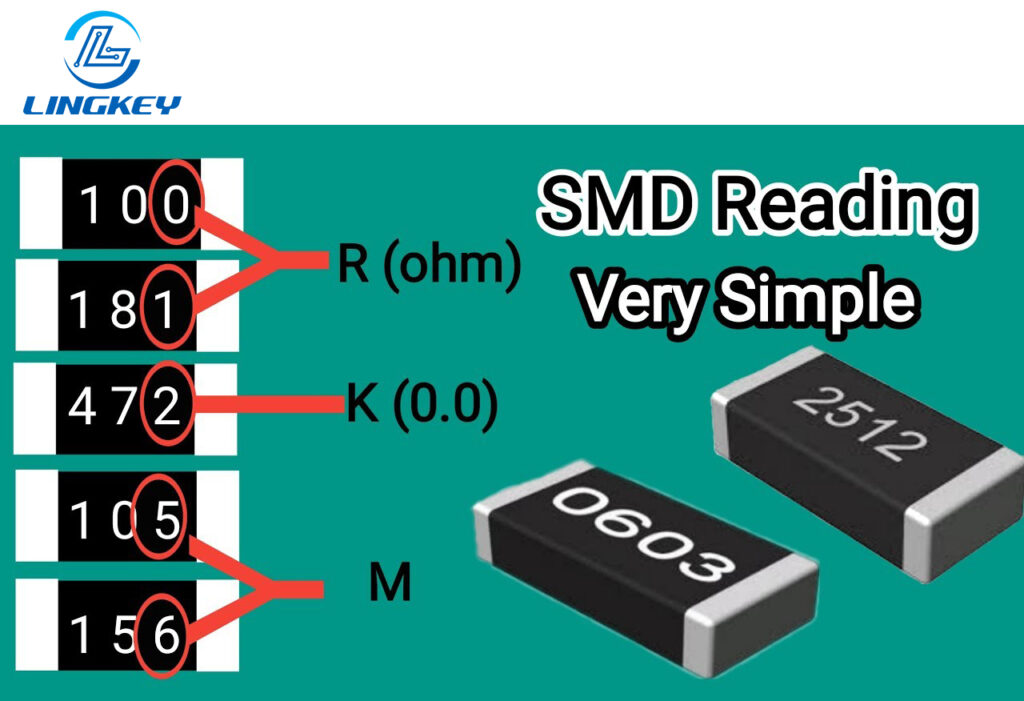
Surface mount resistors (SMDs) are not always marked with color bands. They employ a numbering system to represent value and in some cases the tolerance.
- 3-digit code:First two digits (significant figures), third digit (multiplier).
- “103” = 10 × 1,000 = 10,000Ω (10kΩ)
- 4-digit code(higher precision): First three digits (significant figures), fourth is the multiplier.
- “1002” = 1,000 × 100 = 100,000Ω (100kΩ)
Table: SMD Code Example
SMD Code | Value |
102 | 1kΩ |
472 | 4.7kΩ |
1001 | 1kΩ |
2001 | 20kΩ |
562 | 5.6kΩ |
Knowing these codes gives you the insight to rapidly pick and confirm SMD and surface mount resistors for use in the latest PCB assembly.
Common Mistakes and How to Avoid Them
- Reading in the wrong direction:Color code decoding always starts with the significant figures, not the tolerance band.
- Confusing similar colors:Be wary of red/orange, blue/violet, and faded resistors.
- Ignoring the fourth band:Always factor in tolerance—crucial in precision work.
- Mixing up 4-band, 5-band, and 6-band resistors:Count bands before decoding.
- Assuming standard resistor size means standard code:Always check form factor and marking method.
Testing, Verifying, and Using Resistors in Circuits
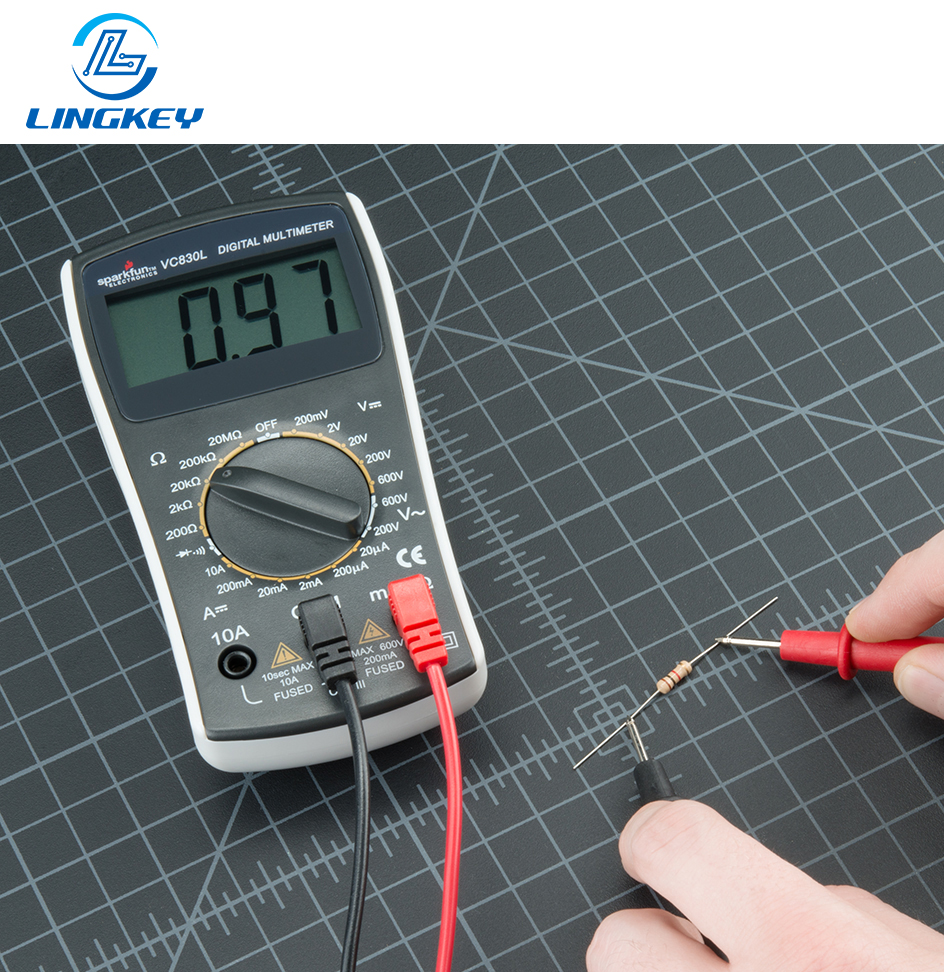
- Check with a multimeter, the resistance reading should be within the nominal value and tolerance.
- For maximum powersafety, select a power rating at least twice the expected dissipation.
- Use the correct resistor type for each application—wirewound resistorsfor more power, SMD for tight spaces.
Frequently Asked Questions (FAQs)
What is the difference between a 5-band resistor and a 4-band resistor?
What does a fourth band indicate?
How can I quickly determine the resistance value?
Are surface mount resistors common in modern electronics?
Conclusion: Everything You Need to Know About Resistor Color Code Calculation
This all inclusive guide has explained the various resistors, how important each colour band is, the details of 4-band, 5-band and 6-band color codes and how to apply the information so as to calculate resistance value and tolerance for any application. From simple through-hole electrolytic capacitors to the more precise ceramic and tantalum film resistors, and even futuristic surface mount capacitors, being able to read your (or your customers’) capacitor codes is vital to good design, successful troubleshooting, and sound electronic performance.
By learning how to read resistor codes for through-hole and surface mount packages, and by leveraging tools such as the resistor code calculator, you will be sure that your circuits are designed with confidence, accuracy, and professionalism. The correct value resistor in the correct location is the Basics to every stable electronic circuit!